
When you're using a multi-fuel stove, you might wonder whether the grate should be open or closed for ideal performance. Keeping it closed is often recommended for wood, as it helps maintain an even burn and contains ash. On the other hand, opening the grate can enhance airflow when burning coal or smokeless fuels. Each choice affects combustion efficiency in different ways, but understanding the nuances could be key to maximizing your stove's potential. So, what factors should you consider before making that decision?
Understanding Multi-Fuel Stove Grates
Understanding multi-fuel stove grates is vital for maximizing your stove's performance and efficiency. Each type of grate—static, riddling, removable, permanent, and reciprocating—serves a specific function that affects how well your stove operates.
For instance, a riddling grate shifts fuel and ash automatically, enhancing air flow and combustion efficiency, while a static grate requires manual stirring to prevent ash build-up. Additionally, the multi-fuel grate elevates the fuel bed to promote necessary airflow beneath coals. Using a multi-fuel stove can lead to cost-efficient heating, especially during fluctuating energy prices.
Grate maintenance is important to guarantee your stove runs smoothly. Regularly clean the grate and ash pan to prevent ash accumulation, which can hinder airflow and lead to premature failure.
If you utilize the removable grate, adjust it based on the type of fuel you're burning for best performance.
Fuel flexibility is another key aspect of multi-fuel grates. They allow you to switch between different fuels, such as coal or smokeless fuels, by adjusting the grate position.
This adaptability guarantees efficient combustion and maximizes heat output. By understanding how each grate type works and implementing proper maintenance practices, you'll enhance your stove's efficiency, ensuring safe and effective heating in your space.
When to Keep the Grate Closed
Knowing when to keep the grate closed is key to optimizing your multi-fuel stove's performance, especially when burning wood. Closing the grate maximizes combustion efficiency and enhances safety by limiting airflow.
Here are a few reasons to keep the grate closed:
- A flat fire bed forms, allowing wood to burn evenly.
- Reduced airflow minimizes the risk of uncontrolled flames and overheating.
- Ash and embers are contained, preventing sparks from escaping.
For effective grate maintenance, guarantee it's closed during cleaning and when the stove isn't in use. This prevents debris from falling into the ash pan and reduces unnecessary airflow that could lead to inefficiencies or unsafe conditions. Additionally, maintaining a closed grate while burning wood can improve air circulation and ensure optimal combustion. Regularly using seasoned wood is also crucial for achieving the best results.
When to Open the Grate
When you open the grate while burning coal or smokeless fuel, you greatly enhance combustion efficiency. This action allows essential airflow to flow under and through the fuel bed, which is fundamental for ideal burning of dense fuels. The slots or holes in the grate facilitate this airflow, enabling clean and efficient combustion while allowing ash to fall away, guaranteeing ongoing airflow. It's critical to reflect on proper grate maintenance and fuel selection. Regularly inspect and clean the grate and ash pan to prevent ash buildup, which can obstruct airflow. Using quality coal is equally important; it minimizes sparks and emissions while guaranteeing the fuel burns effectively. Additionally, using modern stove technology can significantly improve combustion efficiency and reduce harmful emissions. Furthermore, ensure that your stove has good home insulation to retain heat effectively. You may need to adjust the grate's position based on the specific type of coal or smokeless fuel you're using, as different fuels have varying airflow requirements. Always follow the manufacturer's instructions for your stove's operation to maintain efficiency and safety.
Impact on Combustion Efficiency
The position of the grate in your multi-fuel stove greatly influences combustion efficiency. When you adjust the grate, you're directly affecting the air supply and fuel combustion processes.
- Imagine the roaring flames, fueled by ideal airflow, consuming the coal completely.
- Picture the glowing embers of wood, maintaining heat as the air supply is carefully controlled.
- Visualize the clean, efficient heat radiating into your space, minimizing emissions.
For coal and smokeless fuels, keeping the grate open enhances airflow, ensuring complete combustion and maximizing heat output.
Conversely, when burning wood, closing the grate creates a flat fire bed, minimizing under airflow for better combustion efficiency.
Regular maintenance, like emptying the ash pan, is essential to prevent airflow obstructions that can hinder combustion.
Remember, the design of your stove plays a role too; some may not allow for grate adjustments.
Ultimately, managing air supply based on your fuel type is key to achieving efficient combustion and reducing emissions. Additionally, using high-quality, dry fuels can further improve overall fuel efficiency and reduce harmful emissions.
Choosing the Right Grate Type
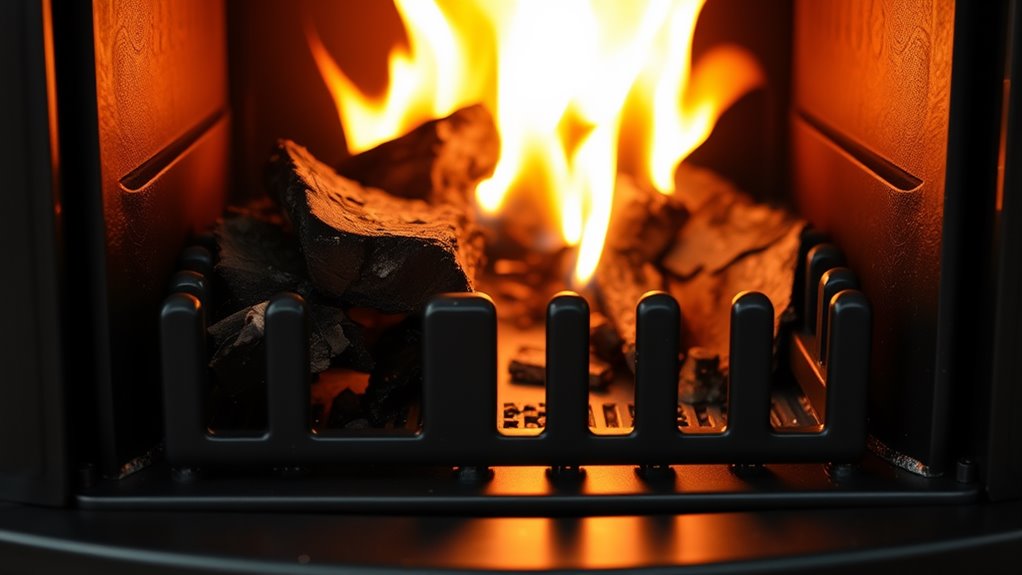
Selecting the right grate type is vital for optimizing your multi-fuel stove's performance. Your choice hinges on the type of fuel you'll be burning and how often you use your stove. If you primarily use solid fuels other than wood, consider a static grate.
However, if you frequently switch fuels, a riddling grate is ideal for automatic ash removal, guaranteeing efficient airflow.
Grate materials play a significant role in durability and heat retention. Opt for robust, heat-resistant materials to withstand the demands of consistent use.
When it comes to grate installation, verify it's compatible with your stove design. For versatile use, removable grates offer flexibility, allowing you to switch fuels easily by removing the grate when it's not needed.
On the other hand, permanent grates are great for regular multi-fuel usage but require frequent cleaning due to ash buildup.
Remember to maintain your grates properly; regular cleaning is essential for both static and riddling types to prevent clogging. Additionally, choosing a grate that matches your fuel type can enhance combustion efficiency and reduce emissions during operation.
Ultimately, understanding the characteristics and functions of each grate type will help you maximize the efficiency of your multi-fuel stove.
Frequently Asked Questions
How Do I Clean My Multi-Fuel Stove Grate?
For effective grate maintenance, use hot water and mild detergent or a baking soda paste. Avoid soaking and abrasive cleaners. Rinse, dry thoroughly, and regularly inspect for rust or wear to maintain ideal performance.
Can I Use the Grate for Both Wood and Coal?
You can certainly enhance your stove's charm by using the grate for both wood and coal. Just remember, adjusting the grate functionality is key to maximizing fuel efficiency for each type of fuel.
What Materials Are Multi-Fuel Grates Made From?
Multi-fuel grates are typically made from cast iron or steel. Cast iron offers superior durability and heat retention, while steel may rust, impacting performance. Choose cast iron for longevity and ideal efficiency in your stove.
Is a Riddling Grate Better Than a Static Grate?
Isn't efficiency essential for your heating needs? Riddling grate advantages include better airflow and easier ash removal, while static grate disadvantages involve manual cleaning and reduced versatility, particularly for burning various solid fuels effectively.
How Often Should I Replace My Stove Grate?
You should replace your stove grate based on usage, wear, and damage. Regular inspections are essential; follow stove maintenance tips to determine grate replacement frequency. Replace when you notice warping, blockages, or reduced efficiency in combustion.
Conclusion
In the end, you might think that keeping the grate either open or closed all the time would simplify your stove experience. Ironically, it's this very nuance of adjusting the grate that truly reveals your stove's potential. By tailoring your approach based on the fuel type, you'll achieve ideal combustion efficiency and a cozy, warm home. So, don't let simplicity fool you; embrace the art of adjustment for the best results. Your stove—and your comfort—will thank you.

Multi fuel stoves are an upcoming trend and the main reason as to why people are switching over to them Read more

As their name suggests, multi fuel stoves allow owners to burn a variety of fuels. They allow the use of Read more

A wood burning stove or multi-fuel stove can be part of a central heating system to keep your house warm Read more