
For your multi-fuel stove, pellets stand out as the most efficient fuel choice. They offer a high combustion efficiency, meaning you get more heat per unit, while their production from compressed biomass results in minimal emissions. Pellets are also easier to store and handle compared to other fuels like wood or coal, and their consistent size allows for an automated feeding system, enhancing your stove’s efficiency further. Additionally, pellets contribute to sustainability with their low emission levels, supporting a greener heating approach. They strike an ideal balance between efficiency, environmental responsibility, and cost-effectiveness. As you explore further, you’ll uncover additional benefits surrounding their usage.
Understanding Multi-fuel Stove Options
Multi-fuel stoves, designed to operate with various fuels like wood, coal, and pellets, offer you flexibility and efficiency in meeting your heating needs. However, enhancing your stove’s performance hinges on proper stove maintenance and effective fuel storage. Each fuel type requires specific considerations to improve efficiency and lessen environmental impact.
For instance, coal, while dense in energy, necessitates careful storage to prevent moisture absorption which can greatly degrade its burning efficiency. Pellets, made from compressed biomass, are prone to disintegration if exposed to humidity, leading to potential blockages in your stove’s feed system and reduced combustion quality. Implementing robust, waterproof storage solutions such as sealed bins or covered areas will protect your fuel’s integrity.
Regular stove maintenance is equally important. Ensuring that the stove’s ventilation system is clear and the combustion chamber is clean boosts efficiency and extends the life of the stove. Accumulated ash and soot can obstruct airflow and heat transfer, increasing fuel consumption and emissions.
Adopting a routine check-up schedule, and promptly addressing any irregularities in stove performance, not only enhances efficiency but also contributes to a healthier environment by reducing unnecessary emissions. By understanding and managing these aspects, you can enhance your multi-fuel stove’s operation, saving money and supporting sustainability.
Wood: Traditional and Available
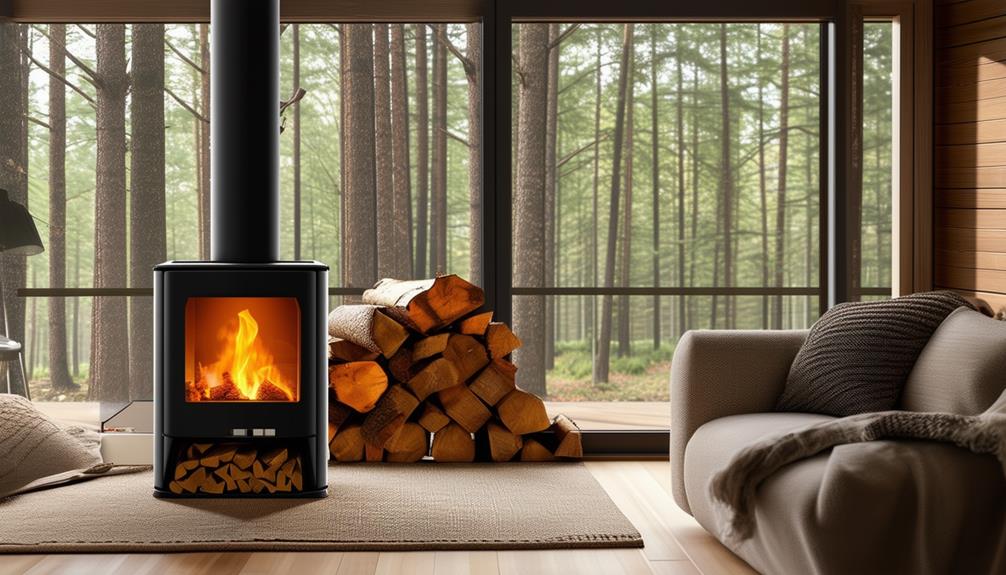
While managing fuel storage and stove maintenance enhances efficiency, using wood in your multi-fuel stove remains a widely accessible and sustainable option.
Wood’s sustainability benefits are considerable. As a renewable resource, wood absorbs carbon dioxide from the atmosphere during its growth, offsetting some of the emissions released during combustion. This cycle makes wood a carbon-neutral resource, aligning with eco-conscious goals.
You’ll find that traditional usage of wood as a fuel has deep roots. Cultures worldwide have relied on wood for heating and cooking for centuries, leveraging its availability and ease of use. Today, advancements in stove design have notably improved the efficiency of wood stoves, reducing harmful particulates and increasing heat output.
To enhance your wood fuel usage, focus on sourcing sustainably harvested wood. This practice not only supports local ecosystems but also guarantees a continuous, sustainable wood supply.
Coal: High Heat Output
If you’re seeking higher heat output from your stove, coal is an efficient choice due to its dense energy content. Different coal types, such as anthracite and bituminous, provide options tailored to your heating needs.
Anthracite, known for its high carbon content—almost 90%—offers a cleaner burn with less smoke and higher heat output than softer coals. Bituminous coal, while producing more smoke, excels in heat generation, making it ideal for colder climates.
Understanding burning techniques is vital for enhancing efficiency and reducing environmental impact. Proper ventilation and maintaining a suitable temperature in your stove are key. This guarantees complete combustion, reducing emissions and increasing the heat output per unit of coal.
You’ll also want to regularly clean your stove to prevent ash build-up, which can impede airflow and efficiency.
It’s important to source your coal responsibly. Opt for suppliers that comply with environmental regulations to lessen the ecological footprint. While coal isn’t the greenest fuel, using it wisely and efficiently can alleviate some of the environmental drawbacks.
As you continue to explore the best fuel options for your stove, keep in mind both the performance characteristics and the environmental implications of your choice.
Pellets: Clean and Consistent
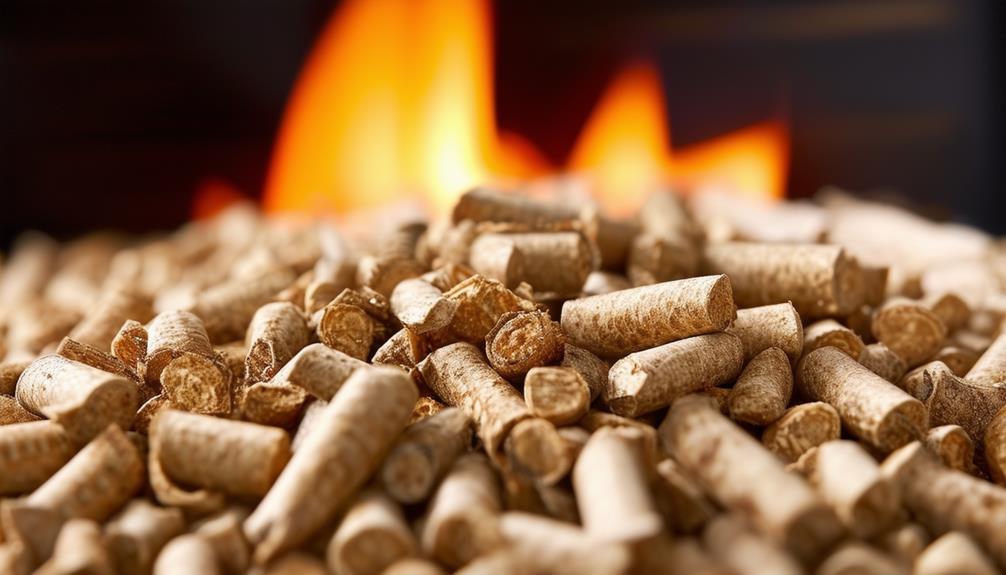
Pellets offer a highly efficient and eco-friendly option for your stove, burning cleanly and producing consistent heat. Their compact size and uniformity allow for automated feeding systems, simplifying your heating process. You’ll notice less ash and fewer emissions compared to traditional wood logs.
However, to maintain the high efficiency and low emission rates, you must guarantee proper pellet storage and manage pellet quality. Pellets absorb moisture easily, which can compromise their burn efficiency. Storing them in a dry, covered area is essential to preserve their heating capabilities. High-quality pellets have low moisture content and are tightly compacted, making certain they burn longer and more consistently.
Here’s a quick overview of the key aspects of pellet usage:
| Feature | Benefit |
|---|---|
| Uniform size | Facilitates consistent burning and heat |
| Low moisture content | Enhances combustion, reduces smoke emissions |
| High energy density | Generates more heat per unit |
| Easy storage | Compact and stackable, saves space |
| Eco-friendly | Produces minimal ash, supports sustainability |
Biomass Briquettes: Eco-Friendly Choice

Biomass briquettes offer a sustainable and efficient fuel alternative, markedly reducing carbon emissions compared to fossil fuels. You’ll find these compacted blocks of organic waste, such as sawdust, agricultural residues, or paper, can be an integral part of your multi-fuel stove’s operation. Their production process, which involves compressing biomass waste into uniform shapes, increases the combustion efficiency and lessens waste.
Here are some reasons why you should consider using biomass briquettes:
- Reduced Environmental Impact: Biomass briquettes burn cleaner, releasing fewer pollutants and greenhouse gases. Their use helps in managing waste effectively, turning potential landfill material into valuable energy.
- Sustainable Energy Source: The materials used in briquettes are renewable. They derive from agricultural and forestry residues, ensuring that your heating solution doesn’t deplete non-renewable resources.
- High Energy Efficiency: These briquettes have a high calorific value, providing more energy per unit weight than many other fuels. This means you’ll need fewer briquettes to produce the same amount of heat.
- Cost-Effective Production: The production process for biomass briquettes is relatively simple and doesn’t require extensive technology or significant capital investment, which can lead to cost savings in large-scale operations.
Comparing Fuel Efficiency and Cost

When comparing fuel efficiency and cost, it’s crucial to assess each fuel type’s return on investment and environmental footprint.
You’ll find that not all fuel types are created equal. Conducting a thorough cost analysis for each option, from wood and coal to biomass briquettes and pellets, reveals significant differences in both short-term costs and long-term benefits.
For instance, while wood is generally cheaper and widely available, it’s less energy-dense compared to pellets and requires more space for storage. On the other hand, pellets, though initially more expensive, offer a higher combustion efficiency, meaning you’ll use less fuel over time for the same heat output. This efficiency translates into fewer emissions and lower heating costs in the long run.
Coal, although highly calorific, poses substantial environmental concerns due to its high carbon emissions. It’s also subject to fluctuating market prices, which can spike due to regulatory changes aimed at reducing carbon footprints.
Biomass briquettes stand out as a cost-effective and sustainable alternative. Made from compressed organic waste, they burn cleaner than coal and are more stable in price due to their renewable nature.
Choosing the right fuel type involves balancing your immediate budget against future savings and ecological considerations.

Multi fuel stoves are an upcoming trend and the main reason as to why people are switching over to them Read more

As their name suggests, multi fuel stoves allow owners to burn a variety of fuels. They allow the use of Read more

A wood burning stove or multi-fuel stove can be part of a central heating system to keep your house warm Read more