
A multi-fuel stove is like a well-tuned orchestra, where each element plays its part to create warmth. To harness the best heat from your stove, you'll want to start by choosing the right fuel and employing effective burning techniques. It's not just about what you burn; the way you maintain your stove can greatly impact its performance. Curious about specific methods and tips that can help you maximize efficiency and enjoyment? There's more to discover that could transform your heating experience.
Choosing the Right Fuel
When you're looking to get the best heat from your multi-fuel stove, choosing the right fuel is essential. For wood, opt for well-seasoned varieties with a moisture content below 20%. Hardwoods like oak, maple, and birch are ideal since they burn longer and produce more heat compared to softer woods. Additionally, it is important to understand that wood species can significantly affect burn efficiency and heat output. Properly managed forests contribute to a sustainable carbon cycle that benefits the environment.
Remember, proper wood seasoning over at least a year enhances burn efficiency, minimizing creosote buildup and improving overall heat output.
On the other hand, consider smokeless coal for a clean-burning alternative. This fuel type, particularly anthracite and manufactured smokeless coal, generates high heat while producing less smoke and harmful emissions, making it an eco-friendly choice.
When using smokeless coal, verify it's compatible with your stove and follow the manufacturer's guidelines for safe combustion. Multi fuel stoves are designed to accommodate various fuel types, ensuring versatility in heating options.
Don't overlook quality; using untreated wood and high-quality smokeless fuels notably reduces emissions and enhances efficiency.
Each fuel variety has unique characteristics, so understanding their properties will help you maximize heat output and minimize environmental impact.
Optimal Stove Maintenance
Maintaining your multi-fuel stove is essential for guaranteeing ideal performance and heat output. Regular maintenance helps you avoid potential issues and keeps your stove running efficiently. Here's a suggested maintenance schedule to guide you:
| Maintenance Task | Frequency | Notes |
|---|---|---|
| Remove ashes and debris | After each use | Use a metal scoop and ash container. |
| Clean stove glass | Weekly | Use a soot-dampened cloth only. |
| Inspect seals and gaskets | Monthly | Look for signs of damage or wear. |
| Deep clean internal parts | Seasonally | At the start and end of heating season. |
| Schedule professional check | Annually | Guarantee thorough inspection and safety. |
Additionally, performing regular cleaning procedures can significantly enhance the efficiency of your stove, as regular cleaning and inspection are crucial for maintaining optimal performance.
Efficient Burning Techniques
Getting the most heat from your multi-fuel stove hinges on mastering efficient burning techniques. Focus on improving combustion efficiency by preheating the combustion air. Use the secondary air control to enhance combustion, especially when you're burning wood. Keep the combustion zone at a minimum of 600°C (1,100°F) to avoid smoldering, and always use dry firewood with less than 18% moisture content for ideal results. Proper usage of wood stoves can significantly improve wood heating efficiency and air quality. Additionally, maintaining a consistent temperature in the combustion zone helps to further optimize heat retention throughout your home.
Select high-quality firewood, as its quality greatly impacts combustion. Avoid burning unclean wood like pallets or old boards.
When lighting the fire, use the top-down method to quickly reach high temperatures. Place dry kindling on the grate, cover it with small logs, and light the firelighter. Initially, fully open the secondary air valve and keep the door ajar for better airflow.
For extended burns, load large pieces of wood tightly, and avoid cross-loading logs, which can lead to a rapid burn. Layer chopped wood at the bottom with kindling on top for efficient lighting, and continue to add fuel while embers remain.
Monitoring and adjusting your air supply is vital to maintaining ideal combustion conditions and maximizing heat output.
Additional Accessories
To maximize the efficiency and output of your multi-fuel stove, consider investing in additional accessories that enhance performance and maintenance.
One essential accessory is a stove thermometer, which monitors temperature to guarantee ideal heat output between 260 and 460°C. Magnetic models, like those from Chimgard and Rutland, are easy to install and priced affordably at $34.99 and $21.99, respectively.
Heat distribution accessories, such as Eco Fan models, effectively circulate warm air. The Eco Fan 800 offers 100 CFM, while the Eco Fan 810 provides 125 CFM, both of which operate without electricity.
Installing vents can also improve heat efficiency by directing warmth to other rooms.
For maintenance, consider moisture meters to verify your wood is adequately dried, as wood with less than 20% moisture content burns more efficiently. This is essential for achieving optimal fuel efficiency, which is a key benefit of multi fuel stoves.
Additionally, cast iron kettles and trivets can be used for cooking and heating water while protecting surfaces.
Don't overlook stove pipe shields and flue hole covers, which maintain safety and efficiency in chimney management.
Investing in these stove accessories will greatly enhance your multi-fuel stove's heat efficiency and longevity.
Safety Considerations
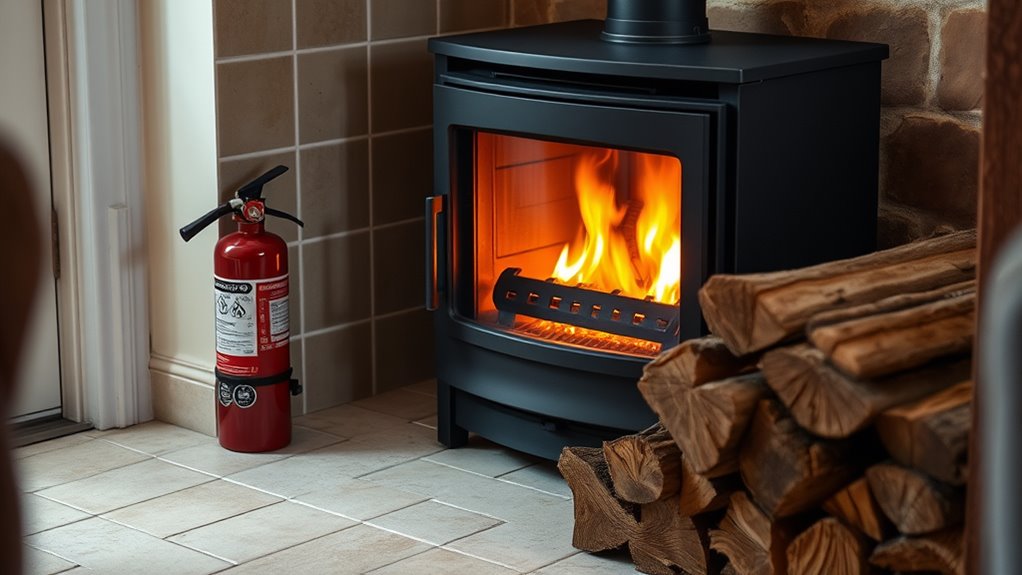
When using a multi-fuel stove, prioritizing safety is vital to guarantee both efficient operation and protection of your home. Start by adhering to installation guidelines that comply with local building codes and safety regulations. Always obtain a building permit before installing your stove, whether it's wood, pellet, or coal-burning.
Inspect new and used stoves for defects, confirming they meet safety standards from recognized testing laboratories. Maintain a clearance of at least 36 inches between the stove and any combustible materials.
During operation, keep children and pets away from the appliance, and use heat-resistant gloves when handling it. Avoid using flammable liquids to ignite your fire, and remember to open the damper before lighting. Burn only dry, well-seasoned wood to limit creosote buildup and reduce the health risks associated with wood smoke exposure.
Regular maintenance is vital, so inspect and clean your chimney flue annually to prevent hazards. Always dispose of ashes in a closed metal container outdoors, and check for cracks in the stove and chimney regularly.
Finally, confirm proper ventilation, install smoke and carbon monoxide detectors, and keep firefighting tools nearby to enhance safety further.
Fuel Options Overview
A variety of fuel options are available for multi-fuel stoves, each offering unique benefits and considerations that can impact your heating efficiency and overall experience. Understanding the different fuel types and their emissions impact is fundamental for ideal performance.
| Fuel Type | Benefits | Considerations |
|---|---|---|
| Wood | Renewable, cost-effective, low emissions | Needs to be well-seasoned; burns best at high temperatures |
| Smokeless Coal | High heat output, clean-burning | Requires correct type; follow manufacturer guidelines |
| Peat | Burns slowly, pleasant aroma | Less energy-dense; needs moisture management |
| White Gas | Clean-burning, easy to start | May not be suitable for all stoves |
Liquid fuels like white gas and kerosene offer versatility, while hybrid options provide flexibility for different environments. Each option's emissions impact varies, so it is important to choose wisely based on your heating needs and environmental considerations. By selecting the right fuel type, you can enhance your stove's efficiency and enjoy a more effective heating experience. Additionally, using high-quality, dry fuels is essential for achieving optimal efficiency and minimal emissions.
Troubleshooting Common Issues
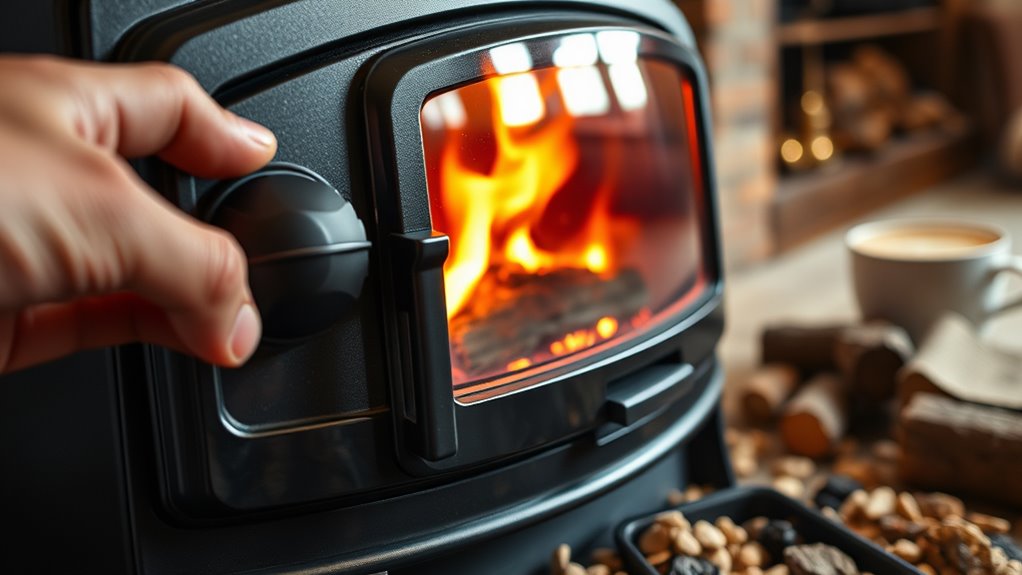
Troubleshooting issues with your multi-fuel stove is essential for maintaining peak performance and guaranteeing a warm, comfortable environment. Here are some common problems and solutions to take into account:
- Overheating: Check for excessive oxygen by verifying door and glass seals are intact. Monitor temperatures with a stove thermometer; ideal ranges are between 260 and 460°C.
- Inadequate heat: Use seasoned wood with less than 20% moisture content. Make certain the flue is clear to prevent blockages that hinder heat output.
- Smoke issues: Inspect the flue for blockages and assure proper ventilation in the room to enhance smoke prevention. Regular chimney sweeping will also help maintain a strong draft.
- Maintenance: Regularly clean your stove and flue to prevent blockages and inefficiencies. Also, inspect seals to avoid air leaks that can lead to overheating. Additionally, ensure you are using fuels with high thermal efficiency to maximize heat output and minimize waste.
Enhancing Heat Distribution
Enhancing heat distribution from your multi-fuel stove is essential for maximizing comfort and efficiency in your home. Start by placing the stove in a central location, confirming air circulates freely around it. Avoid obstructing the stove with furniture or other obstacles; this will help heat spread evenly.
Utilize the stove's design features, like vents and heat outlets, to direct warmth where it's needed most. Leverage natural convection by keeping doors open to allow hot air to move into adjacent rooms. Consider using floor vents or grilles to transfer heat to upper floors. If your stove has built-in panels, they can enhance air circulation, warming larger areas effectively.
Additionally, fans can greatly boost heat distribution. Position a fan in the corner behind the stove to help circulate warm air. Installing air ducts with in-line fans can also effectively channel heat to other rooms.
To guarantee ideal airflow, make sure there's adequate return airflow to prevent heat from becoming trapped. By implementing these strategies, you'll create a more comfortable living space while maximizing the efficiency of your multi-fuel stove. Moreover, using eco-friendly fuels such as wood pellets can further enhance the stove's performance and sustainability.
Frequently Asked Questions
What Types of Wood Are Best for a Multi-Fuel Stove?
For a multi-fuel stove, you'll want hardwood types like oak, ash, and hickory for high heat and long burns. Avoid softwood types like pine and cedar, as they produce less heat and more smoke.
How Do I Know if My Wood Is Dry Enough?
Picture a seasoned log, its cracks whispering secrets of dryness. Use a moisture meter to gauge readiness, and guarantee proper wood storage in a dry, ventilated space. Dry wood ignites efficiency and warmth.
Can I Mix Different Fuel Types in My Stove?
You can mix different fuel types in your stove, but guarantee fuel compatibility. Mixing fuels affects combustion efficiency and emissions, so always follow manufacturer guidelines to avoid hazards and maintain peak performance for your multi-fuel stove.
What Are the Benefits of Using a Stove Fan?
Using a stove fan brings significant benefits, including increased efficiency in heat distribution, reduced fuel consumption, and even room heating. You'll experience quieter operation and low maintenance, enhancing your overall stove performance without extra effort.
How Can I Tell if My Stove Is Overfilled?
You can tell if your stove's overfilled by checking for visual signs like blackened glass or red-hot sections. Monitoring fuel capacity guarantees peak stove efficiency, preventing damage and maintaining safe operation. Regular checks are essential.
Conclusion
By following these tips, you'll turn your multi-fuel stove into a powerhouse of warmth. Remember, well-seasoned wood is your best friend, while regular maintenance guarantees smooth sailing. Light it up using the top-down method, and keep an eye on the temperature to stay in the sweet spot. With these strategies, you'll not only heat your space efficiently but also keep your stove running like a well-oiled machine, delivering comfort all season long.

Multi fuel stoves are an upcoming trend and the main reason as to why people are switching over to them Read more

As their name suggests, multi fuel stoves allow owners to burn a variety of fuels. They allow the use of Read more

A wood burning stove or multi-fuel stove can be part of a central heating system to keep your house warm Read more