Did you know that a flue liner can notably impact the efficiency and safety of your multi-fuel stove? While you might think it's just an optional accessory, the reality is that having a proper flue liner is essential for directing harmful gases outside and preventing potential fire hazards. You may wonder what specific benefits a flue liner offers, or how to choose the right one for your stove. Understanding these details could make all the difference for your home's safety and energy efficiency.
What Is a Flue Liner?
A flue liner, often called a chimney liner, is an important component in home heating systems, designed to connect your stove to the chimney while efficiently expelling fumes. This tube, made from various flue liner materials, plays a significant role in ensuring safe and effective combustion.
It protects combustible materials within your home from ignition and directs smoke outside, reducing the risk of fire hazards. Flue liners come in different types, with flexible steel liners being a popular choice for solid fuel-burning stoves. Depending on the fuel type, you may need 316-grade stainless steel for seasoned wood or 904-grade for frequent coal burning. Properly installed liners also help prevent creosote buildup, which reduces the risk of chimney fires.
The diameter of the liner must match your appliance's exhaust hole size, typically requiring at least 6 inches for wood. Additionally, proper installation is critical for functionality and safety; it should maintain a minimum clearance of 25mm from the chimney wall.
As for flue liner lifespan, it can vary based on material quality and usage but generally lasts for several years with proper maintenance. Ensuring your flue liner is intact is important for peak performance and safety in your heating system.
Benefits of Using a Flue Liner
Using a flue liner considerably enhances the safety and efficiency of your multi-fuel stove. The flue liner advantages are clear when it comes to preventing fire hazards and containing harmful gases. By ensuring proper venting, you protect your home from dangerous fumes like carbon monoxide, thereby promoting chimney safety. Additionally, a flue liner is essential for safe and efficient operation of multi-fuel stoves, as it helps to maintain an optimal burn efficiency which is crucial for maximizing heat output.
| Benefit | Description | Importance |
|---|---|---|
| Fire Hazard Prevention | Contains heat, reducing fire risks | Protects home and occupants |
| Gas Containment | Channels harmful gases safely out of the home | Improves indoor air quality |
| Efficiency Improvement | Enhances draft for better combustion | Maximizes stove performance |
| Chimney Protection | Insulates against heat and corrosion | Extends chimney lifespan |
| Reduced Build-Up | Minimizes soot, tar, and creosote accumulation | Simplifies maintenance tasks |
Installation Requirements
When installing a flue liner for your multi-fuel stove, it's vital to adhere to specific installation requirements to guarantee safety and efficiency.
Proper flue liner installation begins with making sure your chimney is adequately prepared.
Here are some essential considerations:
- Minimum diameter: A 6-inch (150mm) diameter is typically required for non-DEFRA-approved stoves; DEFRA-approved stoves can use a 5-inch liner.
- Chimney condition: Inspect the chimney for cleanliness and structural integrity before proceeding.
- Correct sizing: Choose the appropriate liner size for peak performance and safety. Proper sizing is crucial for optimal performance and compliance with regulations.
- Professional help: Consider hiring a professional to make sure compliance with building regulations.
- Secure connection: Seal and secure all connections to prevent leaks.
Types of Flue Liners
Choosing the right flue liner for your multi-fuel stove involves understanding the various types available, each designed to meet specific requirements based on fuel type and chimney configuration.
The most common flue liner materials include stainless steel, flexible steel, pumice, silica polymer, and thermosetting resin. Stainless steel flue liners are favored for their durability, while flexible steel liners work well with wood, coal, gas, and oil.
When considering flue liner grades, 316-grade liners are cost-effective for seasoned wood, whereas 904-grade liners are recommended for frequent coal burning due to their increased durability.
For high-temperature applications, 316Ti and 316L stainless steel liners are suitable, while AL29-4C liners cater to high-efficiency gas and oil appliances, not solid fuels.
Flue liners come in various diameters, typically starting at 6" for stoves up to 20kW. You can find round, square, and oval configurations to suit different chimney shapes.
Pre-insulated and flexible liners accommodate bends and enhance efficiency. Ensuring you choose the correct material and grade for your specific installation is vital for safe operation. Additionally, using the right flue liner can significantly impact the overall efficiency of your multi-fuel stove.
Risks of Not Having a Liner
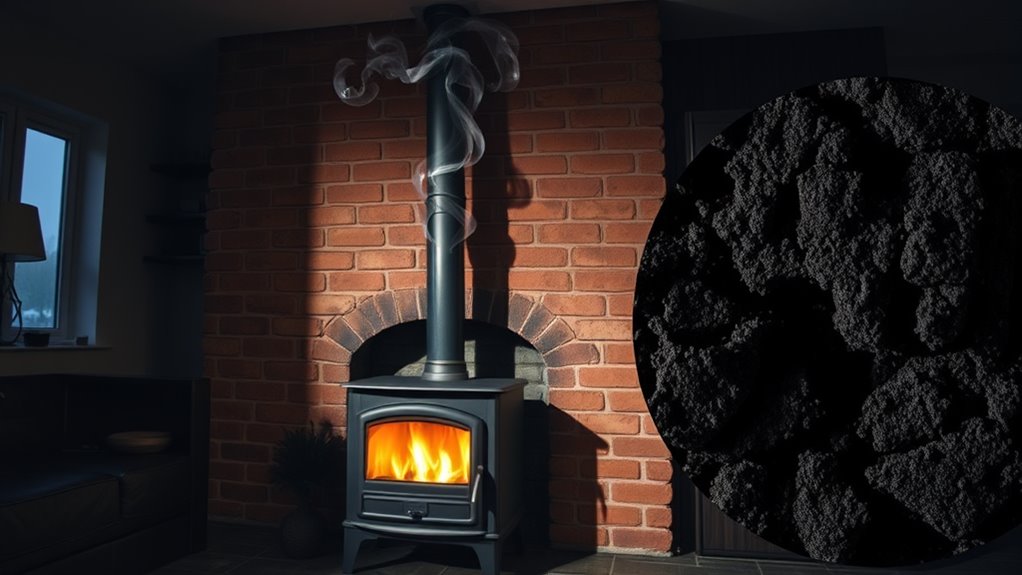
Neglecting to install a flue liner poses significant risks that can compromise both safety and efficiency in your multi-fuel stove system. Without a proper liner, you face potential blockages that could cause dangerous gas backflows and even carbon monoxide poisoning. These blockages often stem from soot and creosote buildup, exacerbated by the absence of insulation.
Here are some key risks associated with not having a flue liner:
- Increased chimney maintenance due to excessive soot accumulation.
- Reduced stove performance from poor draft and inefficient smoke flow.
- Higher fuel costs as an unlined chimney decreases long-term efficiency.
- Risks of hazardous gases entering your living space.
- Long-term damage to the chimney structure leading to costly repairs.
Inadequate ventilation and insulation in unlined chimneys can lead to dangerous conditions and unwanted moisture. As smoke cools and condenses, it can create dampness, further degrading your chimney. Regular sweeping helps prevent the buildup of soot and creosote, which is essential for maintaining a safe and efficient flue system.
To guarantee maximum stove performance and maintain safety, installing a flue liner is crucial. Don't overlook this critical component; it's essential for both the longevity of your stove and the safety of your home.
Legal and Safety Guidelines
Legal and safety guidelines play an essential role in the installation and maintenance of flue liners for multi-fuel stoves. Adhering to these guidelines guarantees regulatory compliance and enhances safety standards within your home.
| Aspect | Details |
|---|---|
| Legal Requirement | Document J recommends using flue liners for compliance. |
| Building Regulations | No mandatory liner for stoves, but installation must comply. |
| Safety Recommendation | Flue liners prevent dangerous emissions and blockages. |
| Inspection Needs | Regular visual checks and smoke tests are essential. |
| Liner Material Importance | Choose based on fuel type to guarantee efficiency and safety. |
While Building Regulations don't explicitly require a flue liner, failing to install one can lead to issues if the chimney is found faulty later. Using a flue liner is highly recommended for proper venting of combustion gases, reducing risks associated with unlined chimneys, such as smoke leakage and inefficiency. Additionally, a minimum 6" flexible liner is necessary beyond the first flue section for compliance. Always consult manufacturer's instructions and conduct regular inspections to maintain safety and efficiency. Furthermore, ensuring a suitable flue and chimney installation is critical for optimal performance and safety.
Maintenance of Flue Liners
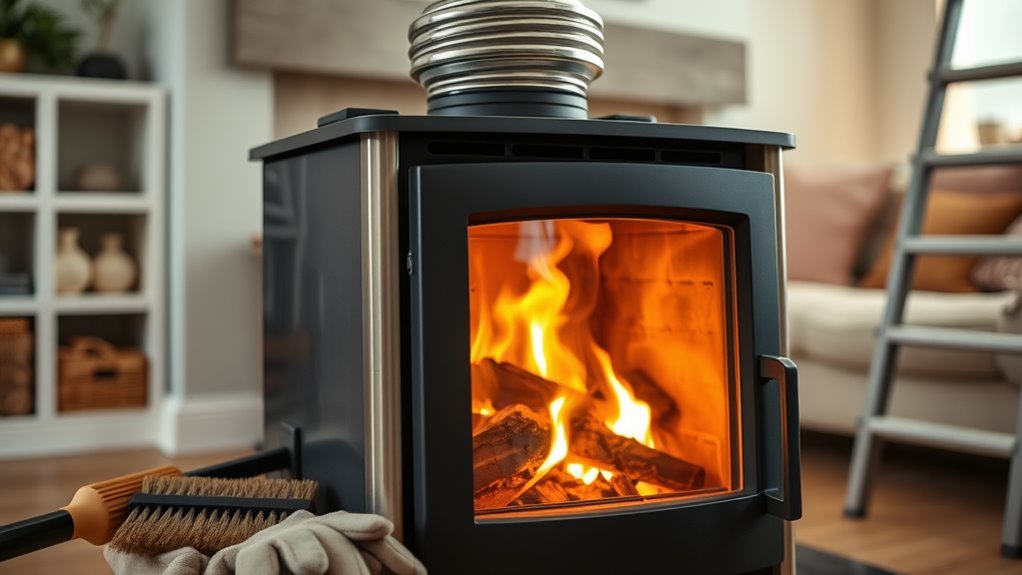
Proper maintenance of flue liners is vital for guaranteeing the safe and efficient operation of your multi-fuel stove. Following regular flue maintenance tips can help you avoid serious issues like chimney fires or gas backups.
Fire safety agencies recommend annual professional cleaning to remove creosote buildup, which is essential for maintaining safety and efficiency. This is particularly important because wood smoke contains harmful particulate matter that can accumulate in your flue if not properly maintained.
Here are some key maintenance practices you should follow:
- Schedule annual inspections with qualified professionals.
- Use rods and brushes specifically designed for your flue liner.
- Vacuum debris from the chimney and firebox after cleaning.
- Verify the cleaning method is appropriate for your liner type.
- Check for blockages that could affect performance.
The cleaning frequency can't be overlooked; neglecting it can lead to significant reductions in stove efficiency and potentially costly repairs.
Professionals use specialized tools and techniques to guarantee your flue liner operates at peak performance.
Choosing the Right Liner
When selecting the right flue liner for your multi-fuel stove, what factors should you consider to confirm peak performance and safety? The choice of liner materials is critical. Stainless steel is the go-to, with 904-grade liners being ideal for multi-fuel stoves due to their superior corrosion resistance and heat tolerance. Additionally, make certain the liner's diameter matches your stove's outlet for maximum efficiency.
Here's a quick comparison of flue liner materials:
| Liner Material | Recommended Use | Key Features |
|---|---|---|
| 316-grade | Wood, gas, oil, low sulphur coal | Good corrosion resistance |
| 904-grade | Multi-fuel (wood, coal, gas, oil) | High temperature and corrosion resistance |
| 316Ti/316L | General use (except high-acidity) | 2100°F heat rating |
Installation techniques also matter; make certain you select a kit tailored to your chimney's specific configuration, including adapters and connectors. By choosing the right liner materials and employing proper installation techniques, you'll enhance safety and efficiency in your multi-fuel stove operation. Additionally, ensure compliance with local regulations to guarantee safe and efficient operation of your stove.
Cost Considerations

Cost considerations play an essential role in the selection and installation of flue liners for multi-fuel stoves. Understanding the cost breakdown is vital for making informed decisions.
Material costs vary greatly, with stainless steel prices ranging from $20 to $90 per linear foot, while aluminum is more affordable at $5 to $30. Installation factors also impact your overall budget, with installation costs for stainless steel liners reaching up to $3,800.
When evaluating your options, consider these key cost elements:
- Material type and quality
- Installation complexity
- DIY vs. professional installation
- Permits and inspections
- Ongoing maintenance costs
A DIY kit can save you money, with aluminum kits priced between $120 and $350. However, professional installation is often recommended for ideal safety and performance.
Beyond the initial costs, don't forget to factor in additional expenses like insulation and cleaning, which can range from $150 to $3,400. Additionally, investing in a multi-fuel stove can lead to cost-effective heating solutions that enhance your overall budget and operational needs. By carefully analyzing these aspects, you'll guarantee your investment in a flue liner aligns with your budget and operational needs.
Frequently Asked Questions
Can I Install a Flue Liner Myself?
You can attempt a DIY installation, but make certain you understand flue liner materials and proper techniques. Incorrect sizing or poor installation might lead to safety hazards, so consider hiring professionals for ideal results and compliance.
How Often Should I Inspect My Flue Liner?
Think of your flue like a car engine; regular checks keep it running smoothly. Schedule flue inspections every decade, following flue maintenance tips to catch issues early and guarantee safe, efficient operation.
What Signs Indicate My Flue Liner Needs Replacement?
If you notice cracks, gaps, or rust stains, your flue liner materials may be compromised. Difficulty starting fires or excessive creosote buildup often indicates it's time for professional flue liner installation and replacement.
Can a Flue Liner Improve Indoor Air Quality?
Yes, a flue liner greatly improves indoor air quality by enhancing flue efficiency. It effectively reduces indoor pollution by directing harmful gases outside, ensuring your home remains safe and breathable while minimizing toxic emissions.
Are There Any Warranties for Flue Liners?
Yes, flue liner warranties exist, often offering lifetime coverage depending on installation. These warranties provide benefits like ensuring safety and compliance, enhancing efficiency, and protecting against damage when properly maintained and installed by certified professionals.
Conclusion
In summary, installing a flue liner for your multi-fuel stove isn't just a recommendation—it's a necessity. Imagine cozying up by the fire, knowing that harmful gases are safely vented away and your home is protected from fire hazards. By choosing the right liner, you guarantee efficient combustion and lower fuel costs while complying with safety regulations. Don't cut corners; prioritize your safety and enjoy the warmth of your stove with peace of mind.

Multi fuel stoves are an upcoming trend and the main reason as to why people are switching over to them Read more

As their name suggests, multi fuel stoves allow owners to burn a variety of fuels. They allow the use of Read more

A wood burning stove or multi-fuel stove can be part of a central heating system to keep your house warm Read more