
It's interesting how many people overlook the importance of cleaning their multi-fuel stove, yet you probably use it often. When you think about it, a clean stove not only improves efficiency but also enhances safety. You might wonder where to start or what tools you'll need to tackle this task effectively. Understanding the cleaning process can save you time and potential issues down the line, but there are a few key steps and considerations that can make a significant difference. Let's explore what you should do to get your stove in top shape.
Preparing for Cleaning
Before you start cleaning your multi-fuel stove, verify it's completely cool to the touch. This step is vital to avoid burns and guarantee safety.
Begin your cleaning checklist by gathering all necessary supplies, including brushes, scrapers, and suitable cleaning products designed for multi-fuel stoves. Preparation techniques also involve clearing the area around the stove to prevent any mess from spreading during the cleaning process. Regular cleaning helps enhance heat output and airflow efficiency, which is crucial for optimal stove performance.
Next, don protective gear such as gloves and safety glasses to safeguard against injury or irritation from cleaning solutions. If you're using any liquids, lay down plastic sheeting or newspapers to catch drips and debris. Confirm good ventilation in the cleaning area to minimize inhalation of any fumes. To ensure optimal results, consider using specialized cleaning materials available at stove retailers.
It's wise to review the manufacturer's guidelines for specific cleaning instructions tailored to your stove model.
Essential tools include a small sweeping brush and shovel for ash removal, a wire brush or steel wool pad for stubborn stains, and a clean cloth for wiping surfaces. A vacuum cleaner is handy for removing soot and dust from the stove's interior. Regular maintenance, including ash removal every 1-2 days for frequently used stoves, is essential for safety and efficiency.
Cleaning Internal Surfaces
With your multi-fuel stove prepared for cleaning, it's time to focus on the internal surfaces.
Begin by using effective removal techniques to clear out ash and debris from the firebox. A vacuum or dustpan works well for loose ash, while larger pieces should be handled carefully with tongs to prevent damage to your vacuum. Additionally, ensure that you wear protective gear such as gloves and eyewear for safety during the cleaning process. Using seasoned wood can help minimize ash buildup in the first place.
After that, perform a thorough debris inspection for stubborn residues, including creosote deposits, which may require additional scrubbing with a stiff-bristled brush.
Next, remove internal components like the grate and baffle for a more in-depth clean. Use appropriate brushes, selecting soft ones for fragile firebricks and wire brushes for sturdier parts.
During your inspection, check for any wear or damage to these components and replace them as necessary.
Vigorously scrub the interior surfaces to eliminate soot and creosote buildup, paying attention to hard-to-reach spots where buildup tends to collect.
After cleaning, reassemble the internal parts carefully, ensuring everything is properly aligned for peak performance.
Regular maintenance will help keep your stove running efficiently and safely.
Cleaning Interior Glass
Cleaning the interior glass of your multi-fuel stove is essential for maintaining ideal visibility and efficiency. Start by verifying the glass has cooled down sufficiently.
Sweep out the wood ashes from the bottom of the stove—these will be useful in your cleaning process. Remove any loose debris from the glass door and surrounding area with a soft brush.
Then, use a soft cloth and warm soapy water to wipe down the inside of the stove glass, cutting through soot buildup.
Now, for the primary cleaning technique, scrunch up old newspaper sheets into balls. Dip them in warm water, then in old wood ashes. Gently scrub the stove glass in circular motions with the ash-covered newspaper.
Remember, this method isn't recommended with coal ashes due to hard particles. After scrubbing, use a dry paper towel to remove the wet ash and clean the glass.
If you prefer alternatives, oven cleaners or bicarbonate of soda paste can be effective, but verify they're suitable for glass. Proper maintenance of your stove's interior will help enhance its overall performance.
To maintain optimal burning temperatures, it's important to ensure that you are using the right fuel type to prevent excessive soot buildup.
Always follow manufacturer guidelines for any cleaning products. Regular glass care prevents soot buildup and maintains your stove's efficiency.
Checking Seals and Gaskets
Maintaining the efficiency of your multi-fuel stove goes beyond just cleaning the interior glass; checking the seals and gaskets is essential for peak performance. Confirming seal integrity not only enhances heating efficiency but also prevents harmful smoke from escaping.
Here's what you need to focus on:
- Visual Inspection: Look for gaps, tears, fraying, or crystallization in the gasket materials. A loose door fit can also indicate wear.
- Dollar Bill Test: Close a dollar bill in the door and try to pull it out. If it slides out easily, the gasket may be too thin or compressed, signaling a need for adjustment or replacement.
- Flame Test: With the stove unlit, check the door seal with a candle. A flame that leans indicates air flow, meaning the gasket isn't sealing properly.
If you find issues, replace the gasket with the correct size for your stove model. Use the ratings plate for specifications, and make sure the new gasket is securely pressed into place. Additionally, regular maintenance of gaskets helps maintain optimal efficiency and prolongs the lifespan of your stove.
After installation, run the dollar bill test again to confirm ideal seal integrity before using your stove.
Maintenance and Deep Cleaning
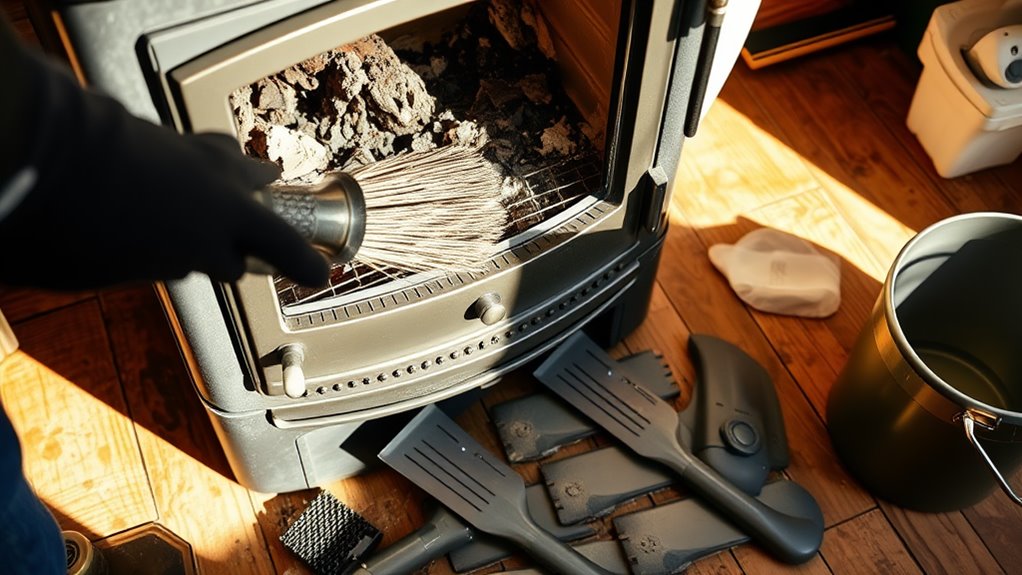
Regular maintenance and deep cleaning of your multi-fuel stove are essential for ideal performance and longevity.
Begin by gathering necessary supplies: a stiff-bristled brush, an ash vacuum or dustpan, gloves, and a mask. Make certain the stove is cool before you start, ideally waiting several hours or overnight.
To begin, clear the firebox of loose ash and debris using your ash vacuum or dustpan.
Next, consult your owner's manual to safely remove interior components like the baffle plate or fire bricks. Protect your floor by covering it with newspaper. Access hard-to-reach spots with your brush, focusing on corners and around air inlets.
Thoroughly vacuum or sweep the firebox to prevent reignition from leftover debris.
Don't forget to clean the flue pipe using a specialized flue brush or a rotary cleaning system. Insert the brush into the flue and work it up and down to dislodge buildup.
Establish a cleaning routine—aim to clean your stove every fortnight or monthly, increasing during winter. This regular upkeep not only enhances stove performance but also guarantees proper ash disposal, extending the lifespan of your appliance. Additionally, maintaining a well-cleaned flue is crucial for preventing build-up that can hinder stove efficiency.
General Maintenance Tips
A well-functioning multi-fuel stove requires consistent attention to maintain peak performance and safety.
By adhering to a structured maintenance routine, you can enhance fuel efficiency and guarantee ideal combustion.
Here are three key maintenance tips:
1. Regular Cleaning: Clean the interior surfaces weekly or bi-weekly with recommended brushes and a powerful vacuum to remove soot and ash.
Don't forget to empty the ash pan to prevent overfilling.
2. Seasonal Checks: At the beginning and end of the heating season, perform a deep clean.
Inspect components for wear, clean the flue system, and adjust air vents according to the manufacturer's guidelines to improve combustion.
3. Professional Inspection: Schedule an annual inspection with a qualified professional.
They can identify potential leaks or blockages, check for creosote buildup, and confirm that all seals and gaskets are intact.
Incorporating these maintenance practices won't only prolong the life of your stove but also enhance its fuel efficiency, guaranteeing that you enjoy clean and efficient heating throughout the colder months. Additionally, using high-quality, dry fuels can significantly improve combustion efficiency and reduce emissions.
Tools and Materials Needed
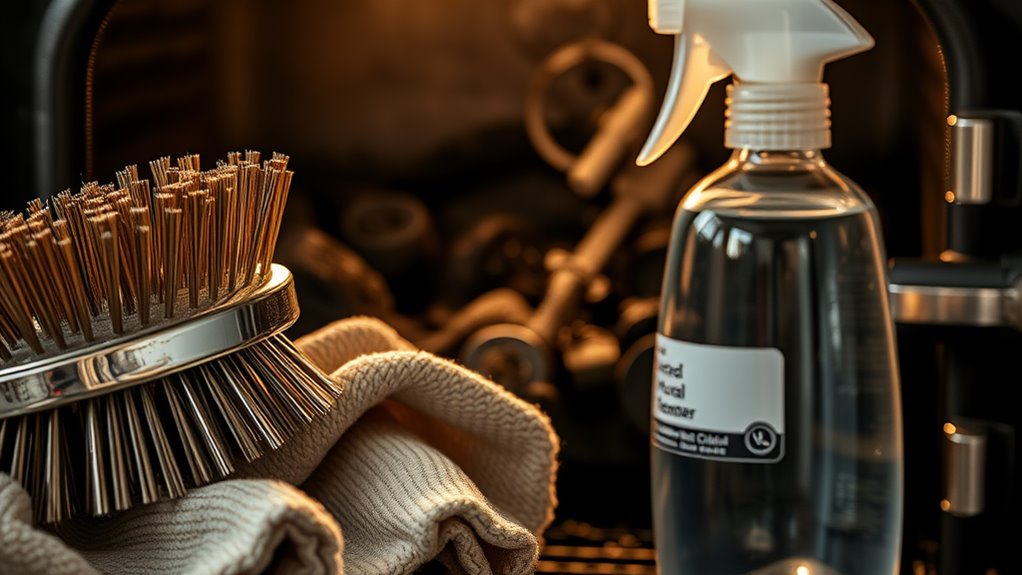
To effectively clean your multi-fuel stove, you'll need a variety of tools and materials that streamline the process and guarantee thoroughness. Proper tool selection and effective cleaning materials are essential for maintaining your stove's efficiency and longevity. Here's a handy list to guide you:
| Category | Tools | Cleaning Materials |
|---|---|---|
| Preparation | Dropcloth or tarps | |
| Ash Removal | Metal ash shovel | Bucket for collecting ash |
| Soot Scrubbing | Stiff fireplace brush | Specialized stove cleaning solution |
| Glass Care | Heat-resistant bristle brushes | Glass cleaner specifically for stoves |
| Finishing Touches | Non-scratch pads | Stove polish |
Having these items on hand will make the cleaning process more efficient. Remember to choose specialized cleaning solutions to avoid damaging any surfaces. With the right tools and materials, you can guarantee your multi-fuel stove stays clean and operates effectively. Regular cleaning not only improves heating efficiency but also extends the lifespan of your stove.
Safety Precautions
Cleaning a multi-fuel stove requires careful attention to safety precautions to protect yourself and guarantee the stove operates efficiently. Here are three essential safety steps to keep in mind:
- Let the stove cool completely before starting to avoid burns.
- Wear appropriate safety gear, including gloves, goggles, and a mask.
- Use a HEPA-filter vacuum to minimize dust and particle dispersion.
Before you begin cleaning, confirm the area is well-ventilated to prevent inhaling harmful fumes. It's essential to cover the surrounding area with drop cloths or tarps to catch any falling soot and debris. When selecting cleaning products, avoid harsh chemicals and abrasive cleaners that could damage the stove's surfaces.
Opt for non-abrasive tools to maintain the stove's integrity. Additionally, ensure that your stove is equipped with carbon monoxide detectors to monitor air quality during the cleaning process. Throughout the cleaning process, keep children and pets away from the area to avoid accidents.
After cleaning, double-check that all parts of the stove are correctly reassembled to prevent malfunctions. Regular maintenance, including inspecting the chimney and flue for blockages, is critical to guarantee your stove operates safely and efficiently.
Troubleshooting Common Issues
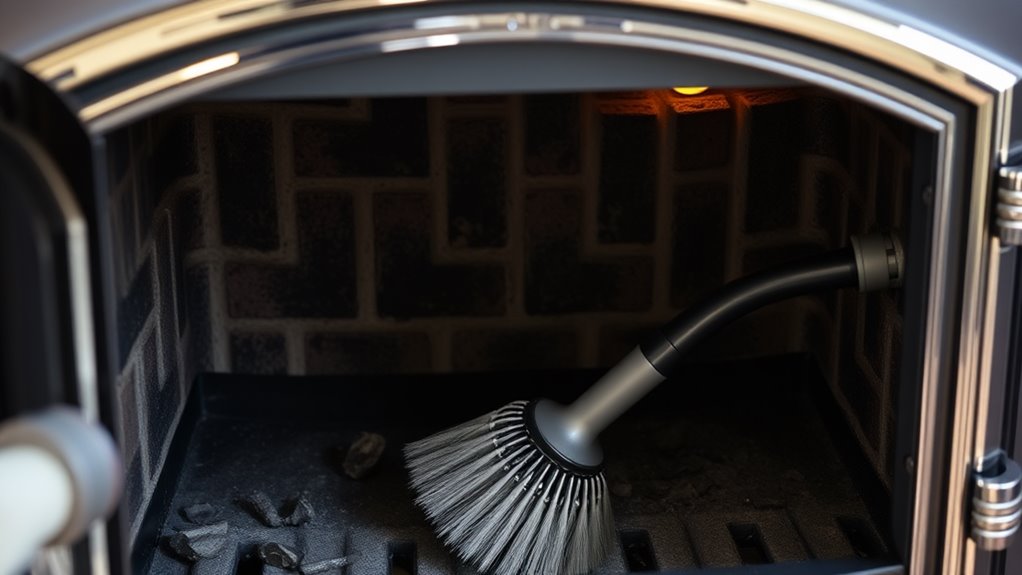
Identifying and resolving common issues with your multi-fuel stove can enhance its performance and prolong its lifespan.
Start by checking for soot and tar buildup, often caused by burning damp wood or unsuitable materials. To prevent this, make sure you use dry wood and smokeless coals. If you notice buildup, use a wire brush and specialized cleaning products to clean surfaces and the chimney effectively.
Next, inspect for damaged internal parts like bent baffles or crumbling firebricks. Overfiring and poor maintenance are frequent culprits. Regular inspections and adherence to safety measures can prevent these issues. If damage occurs, replace the parts promptly and schedule annual chimney sweeps.
Another common issue is glass discoloration, resulting from burning inappropriate fuels. To clean, use a wet cloth with specialized glass cleaners or abrasive paste cleaners with a non-scratch pad.
Lastly, don't neglect the exterior and hearth maintenance. Regularly clean with a brush or vacuum, and apply specialized cleaning products for sheen. Use WD-40 for slate hearths to keep them looking new.
In addition, ensuring you use sustainable fuels not only minimizes environmental impact but also can contribute to the overall efficiency of your stove.
Addressing these concerns guarantees your stove operates efficiently.
Frequency of Cleaning
When it comes to maintaining your multi-fuel stove, establishing a consistent cleaning schedule is crucial for both performance and safety.
The frequency of cleaning largely depends on your usage patterns. Here's a quick guide:
- Heavy Use: Daily ash removal, weekly interior cleaning, monthly flue and chimney cleaning.
- Moderate Use: Every 1 to 2 days for ash removal, interior cleaning every 1 to 3 weeks, and thorough flue cleaning every 2 to 3 months.
- Light Use: Every 2 to 3 days for ash removal, monthly interior cleaning, and flue cleaning every 6 months.
For ideal efficiency, always clean your stove when it's cool, and wear protective gear like gloves and a mask. Regularly inspect seals and gaskets to prevent heat loss and fire hazards. Additionally, monitor air adjustments to optimize combustion and reduce the risk of low burn issues.
Don't forget to check air vents for cleanliness and adjust them according to the manufacturer's guidelines.
Frequently Asked Questions
How Often Should I Replace the Internal Parts of My Stove?
You should inspect your stove's internal parts regularly. Replacement frequency depends on wear; replace insulation tiles if cracks exceed 5 millimeters, and check grates, baffles, and seals for damage to guarantee efficient operation.
Can I Use Vinegar to Clean My Multi-Fuel Stove?
Using vinegar's magical cleaning benefits might sound tempting, but it's not recommended for your multi-fuel stove. Instead, explore specialized cleaning alternatives designed for stoves, ensuring effective maintenance without risking damage to essential components.
What Are the Signs of a Clogged Flue?
When evaluating flue maintenance, look for smoke signals like excessive soot, yellow flames, and unusual odors. These indicators hint at blockages or inefficiencies, necessitating prompt attention to guarantee safe and effective operation of your stove.
Is It Safe to Use a Pressure Washer for Cleaning?
Using a pressure washer for cleaning isn't safe. High pressure can damage internal components and cause rust. Opt for gentler cleaning methods, like soft brushes and vacuums, to maintain your stove's integrity and performance.
Can I Clean My Stove During the Heating Season?
Yes, you can clean your stove during the heating season. Follow stove maintenance tips, maintain a regular cleaning frequency, and guarantee the stove's cool. Prioritize safety, and avoid chemicals for effective cleaning without damage.
Conclusion
So, after you've donned your superhero cleaning cape and tackled that multi-fuel stove, you can bask in the glory of your hard work. Just remember, cleaning isn't just a one-time gig; it's a relationship—like a soap opera with all the drama! Regular maintenance keeps the flames dancing and your home cozy. Embrace the routine, and who knows? You might just start enjoying those charred memories as much as your perfectly roasted marshmallows!

Multi fuel stoves are an upcoming trend and the main reason as to why people are switching over to them Read more

As their name suggests, multi fuel stoves allow owners to burn a variety of fuels. They allow the use of Read more

A wood burning stove or multi-fuel stove can be part of a central heating system to keep your house warm Read more