
The glass in your multi-fuel stove turns black mainly due to the incomplete combustion of fuel, which produces soot. This problem is often exacerbated by using low-quality or moist fuel, which prevents the fuel from burning fully. Also, incorrect airflow and poor ventilation can hinder complete combustion, causing more soot to form. Opt for high-quality, low-moisture fuels and maintain a balanced airflow to reduce soot accumulation on your stove's glass. Make sure you're also applying proper burning techniques and regular maintenance. Understanding these factors will enhance your stove's performance and keep the glass clean, offering a clearer view into the effectiveness of your adjustments.
Types of Fuel and Residue
Different types of fuel in your multi-fuel stove, such as wood, coal, or peat, can leave distinct residues that contribute to the blackening of the glass.
When using wood pellets, you'll find they generally produce less residue compared to traditional logs. This is because wood pellets are manufactured to have low moisture content and a high combustion efficiency, which means they burn hotter and more completely. Consequently, they leave behind less unburned carbon particles that could adhere to the stove glass.
On the other hand, coal briquettes, while being a popular choice for their long burn time and high heat output, tend to create more soot and ash. This is particularly because coal has a naturally higher content of impurities like sulfur. These impurities, when burned, form heavier soot particles that easily accumulate on surfaces, including your stove's glass. To reduce this effect, it's essential to choose high-quality, low-sulfur coal briquettes.
Keep in mind, the type and quality of fuel you use greatly influence the amount of cleaning and maintenance your stove will require. Opt for premium-grade fuels that correspond to your stove's specifications to lessen glass blackening and enhance your stove's overall performance and longevity.
Impact of Airflow and Ventilation
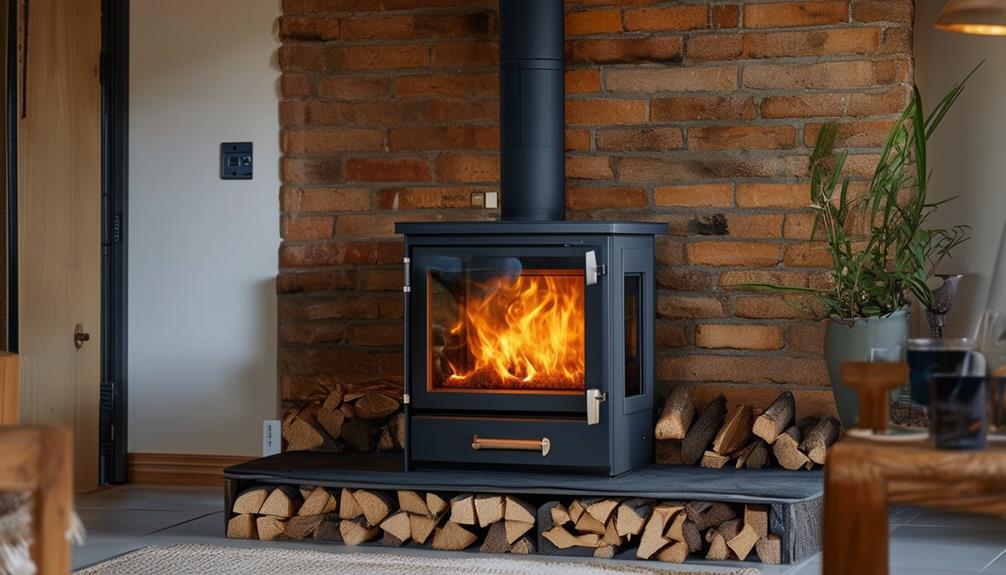
Your stove's efficiency drastically improves when airflow and ventilation are properly managed. Understanding the airflow dynamics within your multi-fuel stove is vital to prevent the glass from blackening and to guarantee peak combustion. The key is to maintain a balanced airflow that supports complete burning while reducing the production of soot and creosote, which are common culprits behind blackened glass.
Ventilation strategies also play an important role. You need to confirm that the air intake vents are clear and fully operational. Regularly check and adjust these vents to match the type of fuel you're using and the desired burning intensity.
Too little air can lead to incomplete combustion, resulting in more smoke and residue on the glass. Conversely, too much air can cause the fuel to burn too rapidly, which not only wastes fuel but also potentially damages the stove.
Make certain the stove's flue and any secondary ventilation systems are clear of obstructions and functioning effectively. These systems are designed to draw off the combustion gases, guaranteeing they don't settle on the stove's glass.
Regular maintenance of these pathways is important to maintain the clarity of your stove's glass and enhance its overall performance.
Importance of Burning Techniques
Mastering the correct burning techniques is vital for maintaining a clean glass window on your multi-fuel stove. It's not just about tossing in any available fuel and lighting it; you must adopt precise combustion techniques to enhance burning efficiency. This isn't just for the sake of your stove's performance—it directly impacts how much residue accumulates on the glass.
To start, verify you're setting your fire correctly. Place your kindling and smaller pieces of wood on top in a way that allows air to circulate freely. This method, known as the top-down burn, guarantees a hotter, more efficient burn right from the outset, reducing the amount of unburnt gases that can blacken your glass.
Moreover, maintain a steady, high temperature once the fire is established. This is essential for complete combustion, where the goal is to burn off as many particulates as possible before they can settle on the glass.
You'll find that managing the air intake properly can drastically increase the efficiency of the burn, keeping the flames hot and reducing the smoke produced.
Effects of Fuel Quality
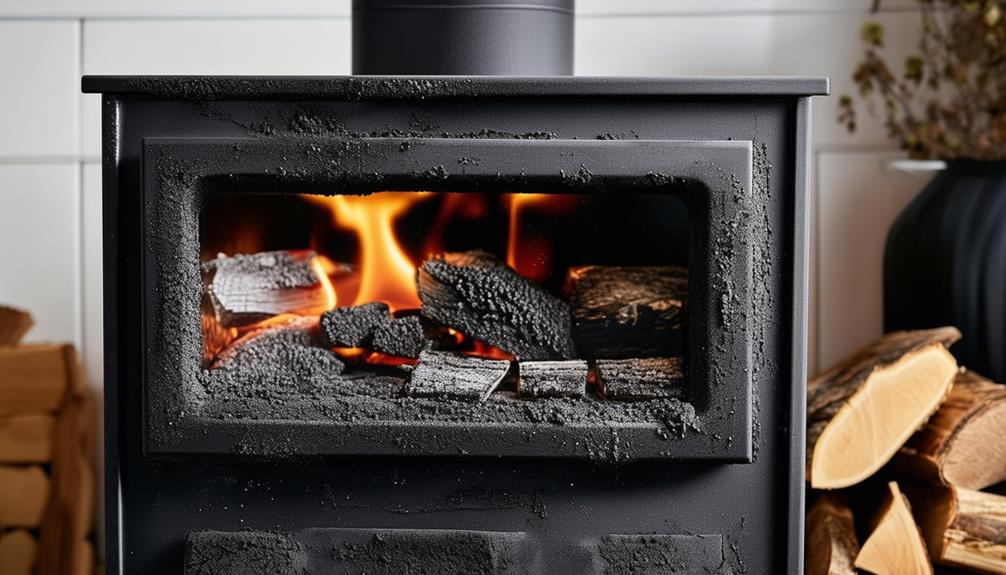
Effects of Fuel Quality
While proper burning techniques are key, the type of fuel you use also greatly impacts how much soot builds up on your stove's glass. The quality and composition of the fuel directly affect the combustion efficiency, influencing the cleanliness of the glass over time.
Here are three critical aspects of fuel quality that you should consider:
- Moisture Content: High moisture levels in your fuel, particularly in wood, can lead to incomplete combustion. This results in excessive smoke and soot which can blacken your stove's glass. Make certain your wood is well-seasoned, ideally with a moisture content below 20%.
- Purity of Fuel: Impurities in your fuel, such as resins and inorganic materials in wood or low-grade coal, can decrease combustion efficiency. These impurities tend to burn at lower temperatures, causing more smoke and leaving a residue on the glass. Opt for high-quality, clean fuels that burn more completely.
- Size and Shape of Fuel: Consistently sized pieces of fuel burn more uniformly, which boosts combustion efficiency. Irregular sizes can lead to uneven burning and increased smoke production. Cutting your fuel to a uniform size can help maintain a cleaner burn and keep your stove's glass clear longer.
Maintenance and Cleaning Tips
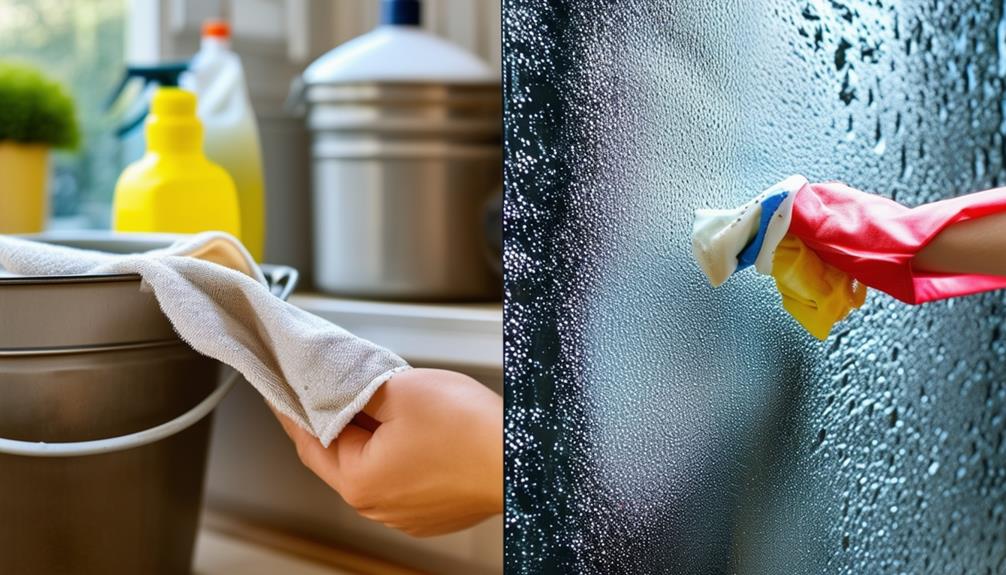
Regular maintenance and periodic cleaning greatly enhance the performance and visibility of your stove's glass. To guarantee that the glass remains clear, it's vital to establish a regular cleaning schedule, adjusting the frequency based on usage and the type of fuel you burn. Hardwoods, for instance, may allow for longer intervals between cleanings compared to softer woods or coals, which tend to produce more soot and creosote.
Here's a practical table to guide you:
| Task | Frequency | Product Suggestion |
|---|---|---|
| Basic Wipe Down | After each use | Soft cloth or newspaper |
| Thorough Cleaning | Weekly to Monthly | Stove glass cleaner |
| Deep Clean & Check | Annually | Professional inspection |
For effective cleaning, use stove glass cleaner specifically designed for this purpose, avoiding household glass cleaners which can leave harmful residues. Apply the cleaner to a cool surface, using a soft cloth to avoid scratches. If soot buildup is stubborn, consider a light application of a non-abrasive cream or paste.
Common Misconceptions Debunked
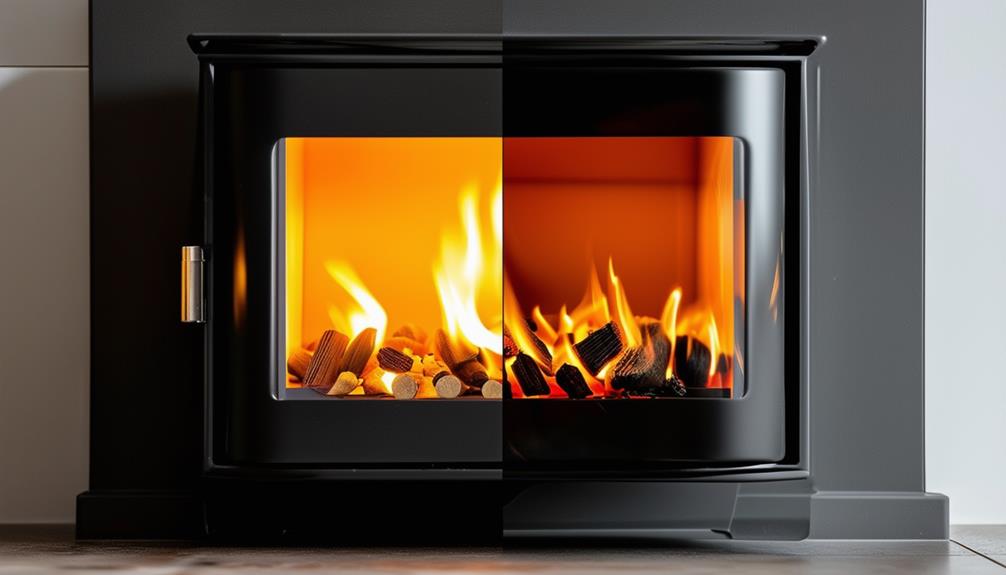
While maintaining your stove's glass is important, it's also essential to address some prevalent myths about what causes the glass to go black. Here's a breakdown of common misconceptions:
- It's all about the wood type: While the type of wood does impact soot buildup, it's not just about hardwood versus softwood. The key factor is the moisture content of the wood. Wood that isn't properly seasoned or has high moisture can lead to more smoke and soot, which blackens the glass.
- Higher temperatures clean the glass: This is a partial truth. High temperatures can indeed help burn off some of the residues, but excessively high temperatures can also lead to other issues like warping your stove's parts. It's more about finding a balanced temperature that promotes efficient burning without damaging your stove.
- Regular cleaning products are fine: This is one of the most common cleaning misconceptions. Using regular household cleaners on your stove glass can be harmful due to chemicals that might react adversely at high temperatures. It's vital to use cleaners specifically designed for stove glass to avoid damage and potentially hazardous fumes.
Understanding these points helps in maintaining a clear view through your stove's glass, debunking the stove myths, and ensuring safe and effective operation.

Multi fuel stoves are an upcoming trend and the main reason as to why people are switching over to them Read more

As their name suggests, multi fuel stoves allow owners to burn a variety of fuels. They allow the use of Read more

A wood burning stove or multi-fuel stove can be part of a central heating system to keep your house warm Read more