
When you consider installing a wood burning stove in the UK, it is important to understand the average costs involved. Typically, you might find prices ranging from £1,500 to £3,000, which includes both the stove itself and installation fees. However, the total can vary widely based on factors like stove quality, installation complexity, and any additional modifications needed, such as chimney lining. Before you make any decisions, it's worth exploring the specific elements that can influence your final expenses and how you can optimize your investment.
Overview of Wood Burning Stove Costs
When considering the average cost of installing a wood burning stove in your UK home, you'll find a range that typically falls between £1,500 and £3,000. This cost isn't just for the stove itself; it also includes installation, which can vary depending on several factors. For instance, the complexity of the installation and the quality of the stove play significant roles in determining your total expenditure. You'll notice that stove prices can vary widely based on wood types and energy efficiency. Choosing a high-efficiency model may cost you more upfront, but it can save you money over time through reduced fuel consumption.
Additionally, your choice of stove material can affect the overall cost and longevity of the installation, with cast-iron stoves often preferred for their durability. Premium stoves, which can run from £2,000 to £5,000+, often come with added benefits like better heat retention and lower emissions. Additionally, the ongoing costs for wood fuel should be considered when budgeting for your stove installation.
Don't forget to factor in additional costs for things like chimney lining or creating a new hearth if you don't have an existing chimney. Proper installation by a HETAS-approved professional guarantees safety and compliance, which can add to the initial cost but provides peace of mind.
Breakdown of Stove Prices
The price of wood burning stoves varies considerably, catering to different budgets and preferences. Understanding the breakdown of stove prices will help you make an informed decision.
Here's how the costs generally stack up:
- Basic Models: Ranging from £300 to £800, with an average cost of £500 to £700. Popular options, like the Clarke Carlton III, can be found for as low as £322.80.
- Mid-Range Models: These typically cost between £900 and £1,600, averaging around £1,100 to £1,500. A well-regarded British-made 5kW stove might set you back about £1,500, which reflects the average price for quality stoves in the UK.
- High-End Models: For premium stoves, expect to pay £2,000 to £5,000 or more. Specialized designs and quality materials can push costs well above £2,000.
Key factors like stove types and brand influence play a significant role in determining price. Brands known for quality or unique designs often command higher prices.
Installation Cost Factors
Choosing the right wood burning stove is just the beginning; understanding the installation costs is equally important. Several factors can greatly influence the final price you'll pay.
First, consider the installation complexity. If you need to modify an existing chimney or create a new hearth, the labour variations can add up quickly. Labour costs typically range from £1,500 to £3,500, depending on the specific requirements of your installation. Additionally, it is crucial to conduct safety inspections, including checking the chimney condition, before starting the installation process to ensure compliance with safety standards.
Next, think about the ventilation and flue system. If your property lacks a flue, you might need a twin wall flue system, which could push your costs over £5,000.
Additionally, the type of hearth you choose matters; it must be non-combustible and meet specific size and thickness requirements based on your stove's heat output, which can incur extra material and labour costs.
Finally, verify you comply with building regulations. If you hire a HETAS installer, you won't need planning permission, but using a non-HETAS installer means notifying local Building Control, which could incur more inspection costs.
Understanding these factors will help you anticipate and manage your installation expenses effectively.
Average Installation Prices
Installing a wood burning stove can be a significant investment, and understanding average installation prices is essential for budgeting. You'll find that the total installation costs can range widely based on various factors. Generally, the average prices for stoves fall between £900 and £1,500, while high-end models can set you back anywhere from £2,500 to £5,000.
When considering the installation fees, keep in mind these points:
- Average labour costs typically range from £500 to £1,500 for simpler installations.
- More complex jobs, like modifying chimneys, can lead to labour costs between £1,500 and £3,500.
- The total installation cost usually varies from £700 to £3,500, influenced by your location, the specialist you hire, and the type of stove you choose.
It's important to note that installation fees include work done by certified professionals to meet building regulations. These fees cover connecting the stove to the flue and ensuring all safety standards are adhered to. Additionally, choosing the right type of boiler system, such as a clip-in back boiler, can affect both the efficiency and cost of your installation.
Knowing these average labour and installation fees can help you make informed decisions when investing in your new stove.
Hearth and Chimney Considerations
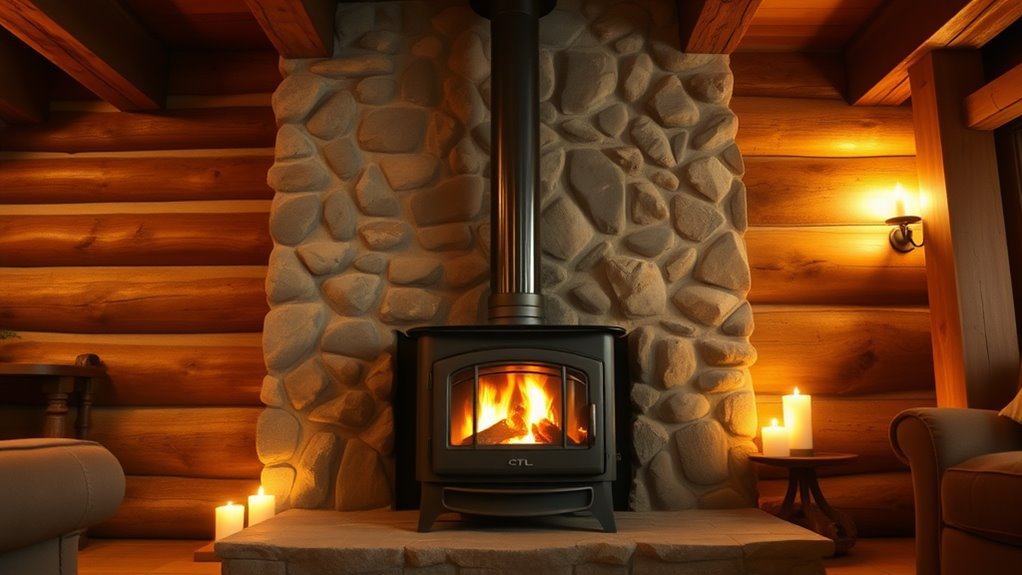
When planning your wood burning stove installation, hearth and chimney considerations play an essential role in guaranteeing safety and efficiency.
First, let's talk about hearth materials. You must use non-combustible materials such as stone, slate, or glass for your hearth. If your stove operates at a base temperature exceeding 100°C, verify your hearth is at least 125mm thick, including necessary air gaps. For a free-standing stove, the hearth should extend 300mm in front and 150mm on either side, with a minimum size of 840mm x 840mm.
Next, consider chimney height. All new chimneys need suitable foundations and a damp-proof course at least 150mm above ground level.
If you're using an existing flue, inspect it for obstructions and verify it's the correct size for your stove. The chimney's flue diameter must match the stove's power output, and flue pipes must maintain a safe distance from combustible materials. An appropriate flue setup is essential for enhancing burning efficiency and safety.
Total Cost Insights
Understanding the total cost of installing a wood burning stove is essential for budget planning. Prices can vary greatly based on the type of stove you choose and the complexity of the installation.
On average, you might spend around £4,000, including VAT, for a wood burning stove and its installation. If your property lacks an existing flue, expect costs to rise to £5,000 or more.
Here are some key factors that influence the total cost:
- Stove Selection: Basic models start at £300, while high-end designer stoves can reach £5,000.
- Installation Complexity: Costs for installation range from £700 to £3,500, depending on the work needed.
- Additional Materials: Consider expenses for permits, chimney flue installation, or structural modifications.
When selecting your stove, think about energy efficiency and design options that fit your home's aesthetic. Additionally, consulting with a wood stove installer can provide insights for accurate sizing and heating expectations.
A well-chosen stove not only enhances your space but also contributes to overall heating efficiency, making it a worthwhile investment in the long run.
Factors Influencing Overall Costs
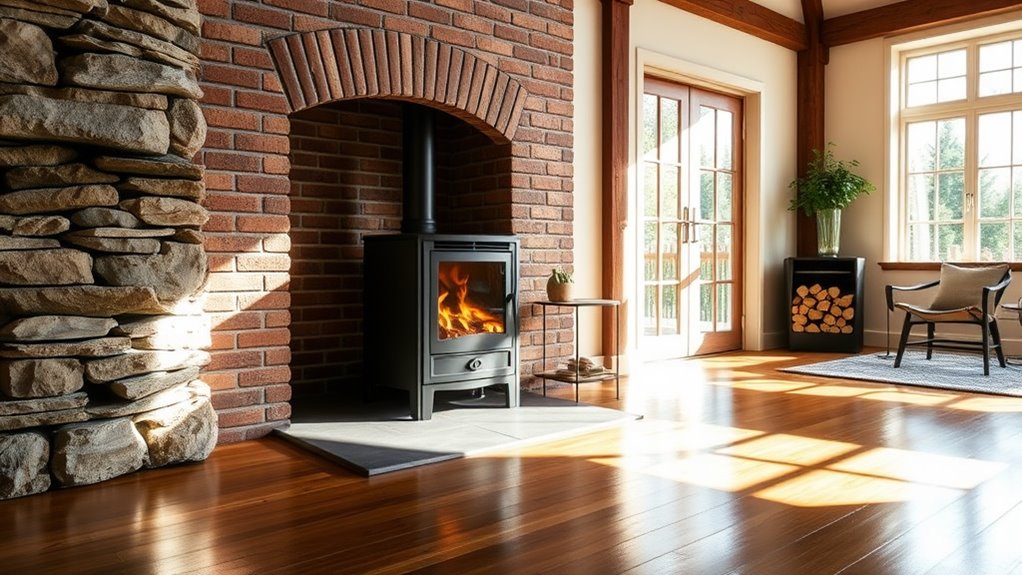
Cost considerations play an essential role in the decision-making process for installing a wood burning stove. The type and quality of the stove considerably affect your budget. Basic models range from £500 to £800, while high-end options can exceed £2,000, showcasing a clear brand comparison. Higher quality stoves often provide better stove efficiency, justifying the increased expense.
Installation complexity is another vital factor. If your home has a suitable chimney, installation costs will be lower. However, if chimney lining or new ventilation systems are necessary, expect to pay more. Additional structural modifications might also add £500 to £2,000+, depending on your home's requirements.
Labour and installation fees vary widely, typically ranging from £500 to £1,500, influenced by the job's complexity and regional differences within the UK. Hiring certified professionals is necessary to guarantee compliance, but it can also add to your costs.
Finally, consider any additional features you might want, like customizations or a new hearth, which can further inflate the overall price. Additionally, the choice between dedicated wood burning stoves and multi-fuel options can impact both your initial investment and long-term operating costs.
Safety and Compliance Requirements
Installing a wood burning stove isn't just about choosing the right model; it's also important to adhere to safety and compliance requirements to guarantee a safe and efficient heating experience.
Understanding and following safety standards and compliance regulations can make all the difference in protecting your home and family.
Here are key points to keep in mind:
- Professional Installation: Always hire certified technicians to confirm proper placement and venting, complying with building regulations.
- Fire-Resistant Base: Your stove needs a non-combustible hearth that meets size and thickness requirements to prevent fire hazards.
- Regular Inspections: Schedule annual checks of your stove and chimney to avoid dangerous creosote buildup, as regular sweeping is essential for safe operation.
It's essential to maintain proper clearance around the stove and to use seasoned wood with low moisture content.
Following these guidelines not only enhances safety but also improves the efficiency of your stove.
Remember, compliance with regulations like those set by HETAS is important for safe operation.
Prioritizing these safety measures guarantees a cozy and secure environment for you and your loved ones.
Maintenance and Long-Term Costs
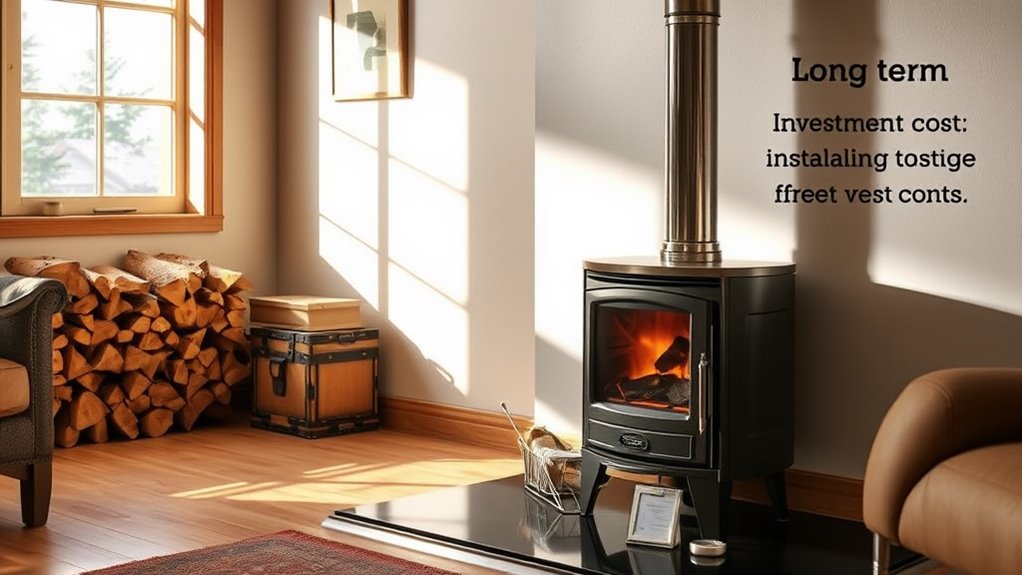
Maintaining a wood burning stove is essential for guaranteeing its longevity and efficiency, and it can save you money in the long run.
You'll want to establish a maintenance frequency that suits how often you use your stove. Regular tasks include removing ashes and inspecting fire bricks weekly, deep cleaning the stove body monthly, and scheduling professional chimney sweeping annually, costing around £50.
A thorough maintenance service typically ranges from £120 to £200, but be prepared for additional costs if repairs arise.
Long-term running costs can greatly vary based on wood sourcing. You'll need about 3-4 cubic meters of wood annually.
The type of wood you choose impacts your expenses, with seasoned logs costing around £116 per cubic meter and kiln-dried logs at £135. If you opt for wood pellets, expect to pay about £120 per cubic meter. Regularly using seasoned wood improves efficiency and reduces emissions.
Staying on top of maintenance not only guarantees safety but also helps your stove operate at its best, ultimately reducing your overall costs.
Frequently Asked Questions
What Are the Benefits of a Wood Burning Stove?
Wood burning stoves offer significant benefits, including reduced environmental impact and impressive heating efficiency. They produce less carbon emissions, heat larger areas quickly, and can lower your utility bills while providing a cozy atmosphere in your home.
How Long Does the Installation Process Take?
The installation timeline varies based on installation complexity. Most installations finish in one day, but factors like chimney size or custom alterations can extend this to several days. Always prepare for possible delays due to weather conditions.
Can I Install a Wood Burning Stove Myself?
Installing a wood burning stove yourself can feel like crafting your own cozy haven. But remember, DIY installation demands attention to safety considerations and regulations. If unsure, hiring a professional might save you headaches later.
What Type of Wood Is Best for Burning?
When choosing the best firewood species, hardwoods like oak and hickory provide longer, hotter burns compared to softwoods. For efficiency and aroma, consider fruitwoods like apple or cherry for a delightful experience.
Are There Any Government Grants for Installing Stoves?
Only 20% of homes qualify for government incentives related to heating systems. While eco-friendly options like heat pumps receive grants, traditional wood burning stoves don't. Make sure to check eligibility criteria for available programs.
Conclusion
To sum up, installing a wood burning stove can be a worthwhile investment, giving you both warmth and a cozy atmosphere. While upfront costs may seem steep—think of it as the price of a vintage vinyl record—you'll enjoy long-term savings on heating. By considering factors like stove type, installation, and maintenance, you can make an informed decision that fits your home and budget. Embrace the charm and efficiency of a wood burning stove, and enjoy the benefits for years to come!

Multi fuel stoves are an upcoming trend and the main reason as to why people are switching over to them Read more

As their name suggests, multi fuel stoves allow owners to burn a variety of fuels. They allow the use of Read more

A wood burning stove or multi-fuel stove can be part of a central heating system to keep your house warm Read more