
When you're considering fitting a multi-fuel stove, it's crucial to understand the various regulations that come into play. You'll need to navigate NFPA standards, local building codes, and safety clearances, among other things. It's not just about choosing the right stove; you must also think about proper installation and compliance with emission standards. If you overlook any of these details, you could run into serious issues down the line. So, what exactly do you need to know to guarantee everything goes smoothly?
Overview of Regulations
When fitting a multi-fuel stove, you need to adhere to a variety of regulations designed to guarantee safety and efficiency. Understanding the different stove types is vital, as the regulations vary based on the specific appliance you choose.
The National Fire Protection Association (NFPA) standards mandate clearances from combustible materials, requiring you to refer to tables that outline specific distances for various stoves. Proper installation is crucial to prevent house fires, so ensuring compliance with NFPA standards is essential.
You must also consider floor protection, with requirements that depend on the length of the stove's legs. If your stove has legs shorter than two inches, you'll need a non-combustible floor.
For emissions standards, the Environmental Protection Agency (EPA) sets limits on particulate matter for new woodstoves and pellet stoves, which phase in over five years. Compliance involves performance testing to verify your installation meets these requirements.
Additionally, proper chimney connections are essential. You can't connect your stove to a chimney flue serving another appliance unless it's listed for such use.
Adhering to these regulations not only protects your home but also guarantees efficient operation of your multi-fuel stove.
Location Requirements
Fitting a multi-fuel stove involves not only understanding regulations related to emissions and clearances but also adhering to specific location requirements that guarantee safety and functionality.
First, verify your installation location meets the minimum room size of 300 cubic feet and has at least one openable window for ventilation. Avoid confined spaces, alcoves, garages, or areas with flammable liquids, as these are prohibited for stove installation. Additionally, ensuring proper airflow and ventilation is crucial for the efficient operation of the stove.
When considering location, maintain a minimum clearance of 36 inches from combustible walls, ceilings, and surfaces. If you're using accepted stoves near non-combustible materials, you may reduce the clearance to 6 inches. Furthermore, ensure that appliances must comply with specific installation regulations to ensure safety and efficiency.
It's vital to confirm stoves don't obstruct doorways or windows, allowing for proper access and maintenance.
Support your appliance securely on concrete bases, masonry arches, or floor ceiling assemblies designed to carry the stove's weight.
For connector pipes, maintain a clearance that's three times their diameter from combustible materials.
Floor Protection Guidelines
Proper floor protection is essential for the safe installation of a multi-fuel stove, as it prevents potential fire hazards and guarantees compliance with regulations. To achieve this, you must use non-combustible floor materials like brick, concrete, slate, or ceramic tile, confirming they meet minimum thickness specifications. For maximum ember protection, a 26-gauge (0.018") sheet metal layer is recommended.
When installing, pay attention to the dimensions of the floor protection. You should have at least 18 inches (45 cm) in front of the stove door, 6 to 8 inches (15 to 20 cm) on the sides, and similar dimensions for the rear unless local codes specify otherwise. More clearance is always preferable for safety. Additionally, using non-combustible materials in your installation helps enhance overall safety.
Your floor assembly should include a concrete base or masonry structure, with solid masonry units at least two inches thick. If using hollow units, verify they're no less than four inches, following proper laying instructions.
The top surface should be covered with no less than 24-gauge (0.024 inches) sheet metal.
Lastly, make sure all components are certified by recognized testing laboratories to guarantee fire resistance and compliance with national and European regulations.
Clearance and Ventilation Standards
Installing a multi-fuel stove requires careful attention to clearance and ventilation standards to guarantee safe operation and compliance with regulations. Proper clearance measurements are essential to prevent heat buildup and potential fire hazards. For instance, the minimum clearance from a wood-burning stove to combustible walls is 36 inches for listed stoves, while uncertified radiant stoves require 48 inches.
To maintain efficient operation, adequate ventilation is vital. Homes built before 2008 might lack sufficient air permeability, necessitating additional ventilation, especially for stoves exceeding 5kW in heat output. It is also important to ensure access to seasoned wood to optimize combustion and efficiency.
Here's a summary of clearance and ventilation standards:
| Clearance Type | Required Measurement |
|---|---|
| Clearance to Walls | 36 inches (listed stoves) |
| Clearance to Ceilings | 36 inches (listed stoves) |
| Ventilation Opening Size | 550mm² for each additional kW |
| Corner Installations | Same minimum clearance applies |
Installation Procedures

When considering how to install a multi-fuel stove, it's crucial to follow a systematic approach to guarantee safety and compliance with regulations.
Start by constructing the framework assembly, which serves as the skeleton for your false chimney breast. Use metal or wooden studs, guaranteeing the base is solid, level, and secure. Attach vertical supports plumb to the bottom, spaced according to your chimney design and flue diameter. Then, add horizontal studs to form the top part.
Next, focus on flue installation. Connect the flue pipes to the stove's top or rear, guaranteeing that openings are created in the ceiling and floor for internal systems. For external systems, drill a hole in the wall to run the flue outside along the building's exterior. It's important to select the correct flue liner diameter to ensure optimal performance and safety.
Don't forget to seal all openings to prevent draughts and leaks. Secure the flue with brackets to guarantee stability.
Throughout the installation, adhere to The Building Regulations 2000, Approved Document J, and guarantee compliance with national fire protection standards.
Following these steps will help you create a safe and efficient multi-fuel stove installation.
Hearth and Flooring Considerations
After confirming your multi-fuel stove is correctly installed, the next focus should be on the hearth and flooring considerations to maintain safety and compliance.
Selecting appropriate hearth materials is vital. Use non-combustible options like stone, concrete, or suitable hearth pads to prevent fire hazards. For stoves exceeding 100°C, a constructional hearth of at least 125mm thick is mandatory.
Make certain the hearth extends at least 300mm in front and 150mm on each side for freestanding stoves, covering a minimum area of 840 x 840mm. If your stove is in a fireplace recess, it should project at least 500mm into the room.
Floor protection is also essential; make sure floors are shielded from heat and hot coals, using materials like slate or brick that are mortared in place. These should extend 12 inches beyond the stove's sides and 18 inches beyond the door side.
Finally, consider design aesthetics. While function is paramount, choose materials that complement your interior, making sure your hearth not only meets regulations but also enhances your space. Additionally, ensuring compliance with local laws is crucial for a safe and legal installation.
Safety Precautions
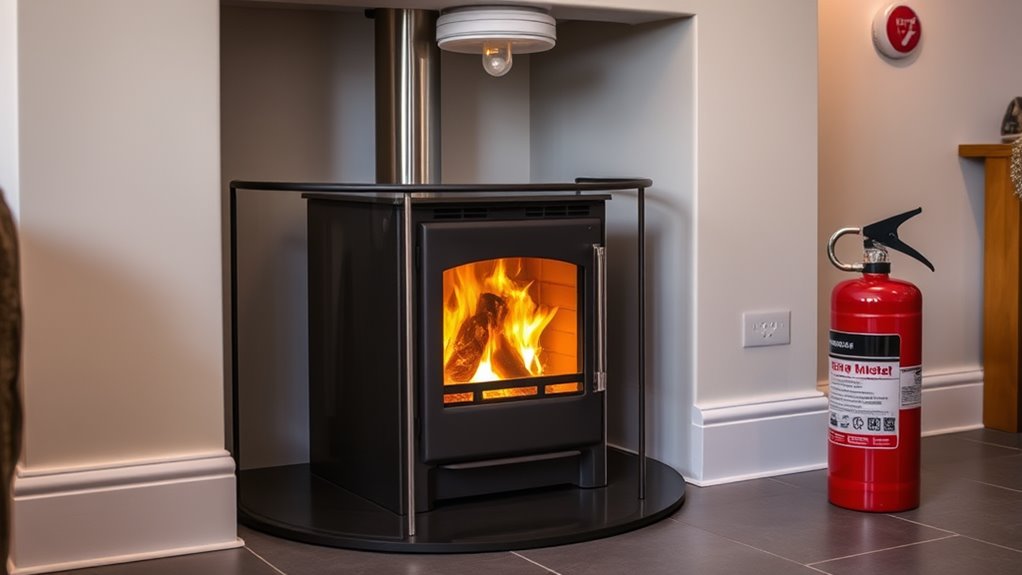
Guaranteeing safety precautions around your multi-fuel stove is essential from the moment of installation. First, maintain clearances from combustible materials; keep a minimum distance of at least 1500mm from any flammable surfaces.
It's critical to leave a permanent free air gap of 150mm around the sides and top, and at least 50mm at the back. The hearth must extend at least 18 inches on all sides and consist of non-combustible material.
Protect your stove from radiant heat by using fire-resistant materials, assuring that any shielding extends sufficiently beyond the stove. Proper ventilation is key; install ducts to supply combustion air from outside, preventing cold air from entering your space.
Position your stove for ideal air circulation, avoiding high-traffic areas to reduce the risk of accidents.
Lastly, prioritize installation and maintenance. Engage a qualified professional to set up the flue system for proper ventilation, avoiding sharp turns that could lead to fire hazards. Additionally, ensure that your installation complies with current building regulations to enhance safety and effectiveness.
Regularly inspect your stove to guarantee compliance with stove safety standards and prevent chimney fires. Following these precautions will greatly enhance safety and performance.
Compliance With Standards
Compliance with installation standards is vital for the safe and efficient operation of your multi-fuel stove. Proper installation guarantees not just safety but also optimizes stove efficiency, allowing you to effectively burn various fuel types.
First, adhere to minimum clearance requirements. Your stove should maintain at least 36 inches from combustible materials, although this can be reduced with protective barriers. When dealing with non-combustible surfaces, clearances can drop to as low as 6 inches, except for specific cases with fuel insertion.
Floor protection is significant—install your stove on a non-combustible base like concrete or masonry. Verify the surrounding area is protected by extending the base at least 18 inches in all directions.
Additionally, your stove must rest on a non-combustible hearth, which should extend 150mm to the rear and sides, and 300mm in front. If it's tested to have an under-stove temperature of less than 100 degrees, the hearth must be at least 12mm thick.
Lastly, follow all installation procedures, confirming proper ventilation and avoiding confined spaces. Adhering to these standards will enhance your stove's performance and longevity. Furthermore, selecting appropriate fuels can significantly impact both efficiency and safety during operation.
Additional Regulatory Resources

When fitting a multi-fuel stove, it's crucial to consult additional regulatory resources to guarantee your installation meets all necessary standards.
These resources help you navigate the complex installation guidelines and assure compliance with local building codes. Here are four key resources you should consider:
- Local Building Authority: Contact your local building inspector for specific regulations and permitting requirements in your area.
- Manufacturer's Guidelines: Always refer to the manufacturer's installation manual for specifications regarding clearances, ventilation, and chimney requirements.
- National Fire Protection Association (NFPA): Review NFPA guidelines, which offer extensive information on safe installation practices and maintenance of stoves.
- Professional Installers: Consult with certified installers who can provide insight on proper practices and confirm adherence to safety standards.
Additionally, it's important to ensure that your installation follows guidelines pertaining to environmentally friendly alternatives to conventional heating methods, which can enhance both efficiency and safety.
Frequently Asked Questions
Can I Install a Multi-Fuel Stove in a Mobile Home?
You can install a multi-fuel stove in a mobile home, but be aware of mobile home considerations and installation challenges. Confirm compliance with regulations, proper ventilation, and appropriate clearances to guarantee safety and efficiency.
What Fuel Types Are Allowed for Multi-Fuel Stoves?
Imagine cozy evenings by the fire. For your multi-fuel stove, you can use wood pellets and various biomass fuels, ensuring efficient burning and reduced emissions, while enjoying a warm and inviting atmosphere.
How Often Should I Clean My Multi-Fuel Stove?
You should clean your multi-fuel stove regularly for peak performance. Aim for daily ash removal, weekly glass cleaning, and monthly flue checks. Following these maintenance tips guarantees safety and efficiency in operation.
Is a Permit Required for Stove Installation?
Think of the permit process as the foundation for your stove's safety. Yes, you need a permit before installation. Follow the installation guidelines closely to guarantee compliance, preventing potential fines and ensuring safe operation.
Can I Install a Stove Myself or Hire a Professional?
You can attempt DIY installation, but you'll need professional advice to ascertain safety and compliance. Improper setups risk hazards, so hiring a certified installer often guarantees a reliable, compliant, and safe stove operation.
Conclusion
In summary, adhering to regulations when fitting a multi-fuel stove is essential for safety and efficiency. Did you know that improper installation can increase the risk of chimney fires by up to 30%? By following the outlined standards, maintaining clearances, and using appropriate materials, you can greatly reduce hazards while maximizing performance. Always consult local authorities and certified installers to guarantee compliance and peace of mind in your home heating solution.

Multi fuel stoves are an upcoming trend and the main reason as to why people are switching over to them Read more

As their name suggests, multi fuel stoves allow owners to burn a variety of fuels. They allow the use of Read more

A wood burning stove or multi-fuel stove can be part of a central heating system to keep your house warm Read more