
When it comes to maintaining your log burner, one key question you might have is how often it needs to be swept. Generally, you should aim for at least once a year, but if you burn unseasoned wood or use it frequently, you may need to contemplate more regular checks. Ignoring this aspect can lead to serious issues, including creosote buildup and even chimney fires. So, what factors should you take into account to determine the right frequency for your situation? Let's explore this further.
Recommended Sweeping Frequency
When it comes to maintaining your log burner, keeping up with the recommended sweeping frequency is vital. If you primarily burn wood, you should plan to sweep your chimney at least twice a year. During periods of heavy usage, you might even need to sweep every six months to avoid dangerous creosote buildup. Burning seasoned firewood can help reduce this accumulation, making your sweeping sessions more effective. Regular chimney sweeping is essential for chimney fire safety, as it helps prevent dangerous buildup of soot and creosote. Additionally, regular cleaning enhances stove efficiency which contributes to better performance.
Your usage patterns play a significant role in determining how often you need to sweep. If you use your log burner occasionally, sweeping every one to two years might suffice. However, regular users should aim for annual sweeping to guarantee peak performance and safety. Additionally, annual chimney inspections are important to identify any potential issues early on.
Look out for signs that indicate the need for sweeping, such as reduced draft, excessive smoke production, or foul odors. These are indicators of obstructions that require immediate attention. Employing professional sweeping techniques by a certified chimney sweep guarantees that your log burner remains safe and efficient, while also addressing any hidden problems that you mightn't notice during routine inspections.
Importance of Regular Sweeping
Regular sweeping of your log burner is essential for guaranteeing safety and efficiency in your home. By employing proper sweeping techniques, you can effectively remove flammable substances like soot, tar, and creosote.
These build-ups not only increase the risk of chimney fires but can also restrict airflow, causing smoke to linger and reducing your stove's efficiency. Regular sweeping considerably lowers the chance of chimney fires, which can spread quickly and lead to costly damage.
Additionally, a clean chimney promotes better airflow and more efficient combustion, maximizing heat output while minimizing carbon monoxide production. This not only enhances the overall performance of your stove but also keeps your home safer by reducing the risk of harmful gases entering your living space. Regular chimney inspections, combined with routine sweeping, help you identify potential issues early, extending the lifespan of your stove and chimney system. Furthermore, maintaining a clean chimney ensures longevity of your stove by preventing unnecessary wear and tear on its components. Regular chimney sweeping is crucial for maintaining safety and compliance with established standards in your home.
Factors Affecting Sweeping Needs
Understanding the factors that influence how often you should sweep your log burner can help you maintain its efficiency and safety. One key factor is chimney design; a straight, well-ventilated chimney reduces creosote buildup, while complex designs may trap more soot, necessitating more frequent sweeping.
The type of wood you burn also plays an important role. Hardwoods like oak produce less creosote compared to softwoods like pine, which can lead to significant buildup. If you use seasoned firewood, you'll likely experience reduced creosote accumulation, but regular sweeps are still important.
Your usage frequency directly impacts how often you need to clean. If you burn wood daily, twice a year is advisable. However, if you use your burner only occasionally, annual sweeping might suffice. Regular chimney sweeping is essential for the safety and efficiency of fireplaces and wood-burning stoves, as it prevents dangerous creosote buildup.
Environmental conditions, such as humidity and weather patterns, can further affect chimney maintenance needs, as they influence how well your chimney draws air.
Finally, pay attention to signs indicating your log burner needs attention, like reduced draft or foul odors. By considering these factors, you can effectively manage your log burner's maintenance and guarantee its safe operation.
Maintenance Beyond Sweeping
Maintaining your log burner goes beyond just sweeping; it involves a thorough approach to guarantee both safety and efficiency.
Regular maintenance of both exterior and internal components is essential for ideal performance. Here are key tasks you should focus on:
- Exterior Maintenance: Regularly inspect for scratches or cracks to prevent rust.
- Glass and Door Maintenance: Clean the glass door with specialized cleaners and check door seals to prevent air leaks.
- Chimney and Flue Maintenance: Sweep your chimney at least twice a year to avoid hazardous creosote buildup.
- Internal Components: Remove ash regularly and inspect for wear, ensuring safe operation.
- Professional Assistance: Don't hesitate to hire professionals for chimney cleaning if needed.
Additionally, regular upkeep of your log burner can enhance energy efficiency and reduce overall energy bills through effective heating performance.
Best Practices for Operation
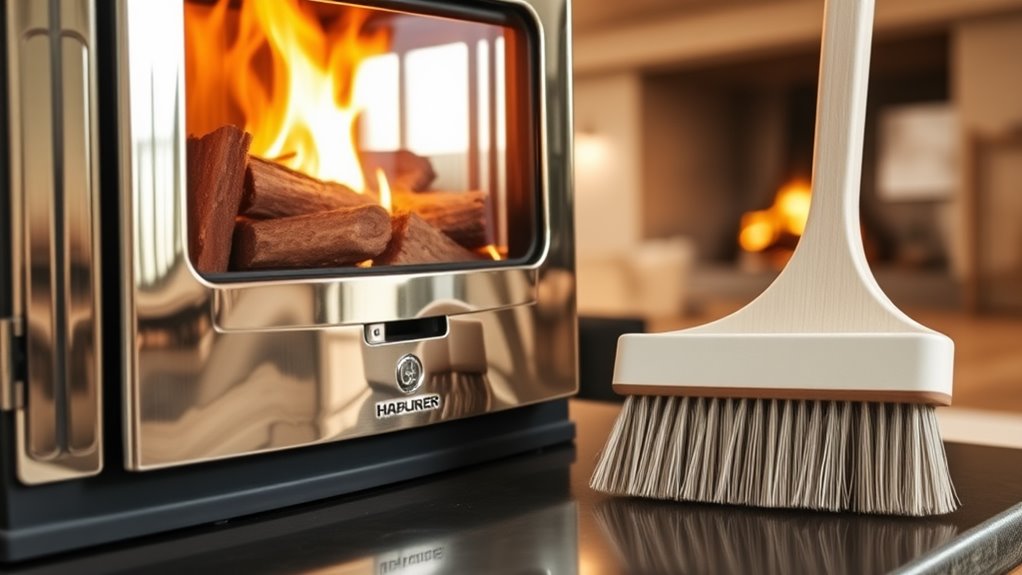
Operating a log burner effectively requires attention to several best practices that enhance both safety and efficiency.
First, always use seasoned firewood with a moisture content around or below 20%. This reduces creosote buildup and improves combustion. Avoid slow burns, as they can lead to excess residue accumulation.
Managing your air vent is essential. Keep it open until the fuel is completely burned to promote ideal airflow and efficient burning. Regularly remove ashes to maintain performance and guarantee that your log burner operates at its best.
Establish a sweeping schedule based on usage, ideally sweeping your chimney at least twice a year if you're using wood. Perform seasonal sweeps at the end of the heating season and before autumn.
Regular chimney inspections are vital to catch any blockages or debris, which can hinder efficiency. Additionally, burning seasoned wood ensures moisture is evaporated, leading to a cleaner and hotter fire.
Finally, check your stove gaskets regularly to prevent air leaks, which can negatively impact your burner's performance.
Safety and Efficiency Tips
To guarantee both safety and efficiency when using a log burner, follow key practices that prevent hazards and enhance performance.
Regular maintenance is vital, including the use of effective sweeping techniques and timely chimney inspections. Here are some essential tips:
- Sweep Twice a Year: For wood-burning stoves, schedule sweeping every six months to prevent creosote buildup.
- Use Seasoned Wood: Burning seasoned firewood reduces creosote accumulation and improves combustion efficiency.
- Monitor Airflow: Make sure that your chimney's airflow remains unobstructed for ideal burning and heat output.
- Watch for Warning Signs: Look out for excessive smoke, foul odors, or difficulty starting fires, which indicate a need for immediate sweeping.
- Hire Professionals: Consider professional chimney inspections to guarantee thorough cleaning and to identify potential hazards.
- Ensuring proper maintenance and cleanliness of your log burner can significantly reduce health risks associated with wood smoke.
Frequently Asked Questions
What Tools Do I Need for Sweeping a Log Burner?
For sweeping a log burner, you'll need quality brushes, flexible rods, and safety gear. Use proper cleaning techniques and adhere to safety precautions to guarantee effective cleaning and maintain peak performance of your burner.
Can I Sweep My Log Burner Myself?
While it's tempting to tackle sweeping yourself, remember that improper sweeping techniques can lead to dangers. Always prioritize safety precautions and consider hiring a professional who knows the ins and outs of effective chimney care.
How Much Does a Professional Sweeping Cost?
Professional sweeping costs vary, typically between £50 and £150. Factors like chimney maintenance, accessibility, and type of fuel influence pricing. Regular sweeps guarantee safety and efficiency, potentially saving you more in the long run.
What Are Signs My Log Burner Needs Sweeping?
Sizzling signs signal safety indicators; if you notice odors, smoke, or soot, it's time to act. Poor burning efficiency and visible buildup mean your log burner needs sweeping for ideal performance and safety.
What Happens if I Don't Sweep My Log Burner?
If you don't sweep your log burner, creosote buildup can occur, considerably increasing the risk of chimney fires. This neglect compromises safety, efficiency, and air quality, potentially leading to costly repairs and health hazards.
Conclusion
To sum up, regularly sweeping your log burner is essential for safety and efficiency. By following the recommended frequencies and considering factors like wood type and usage, you can prevent dangerous creosote buildup. Remember, a well-maintained chimney not only protects your home but also enhances your burning experience. So, why risk it? Schedule that sweep and enjoy the warmth of your log burner with peace of mind, knowing you've taken the necessary steps for safe operation.

Multi fuel stoves are an upcoming trend and the main reason as to why people are switching over to them Read more

As their name suggests, multi fuel stoves allow owners to burn a variety of fuels. They allow the use of Read more

A wood burning stove or multi-fuel stove can be part of a central heating system to keep your house warm Read more