
A log burner is like a steadfast companion, providing warmth through the chill of winter. But how long can you truly rely on this source of comfort? The lifespan varies, influenced by factors such as materials and maintenance. You might wonder if your investment will stand the test of time or if it's destined for an early retirement. Understanding the key elements that affect longevity can help you make informed decisions, ensuring your log burner remains a reliable ally. So, what should you be paying attention to?
Key Factors Influencing Lifespan
When it comes to the lifespan of your log burner, several key factors play a crucial role. First and foremost, materials quality is critical. High-quality stoves made from durable materials like cast iron or steel generally last longer. Cast iron models can withstand high temperatures, while steel stoves, though lighter, require proper care to maximize their lifespan. The average lifespan of wood burning stoves can range from 10 to 20 years, which can be extended with diligent maintenance.
Additionally, using a modern EPA certified stove can enhance both efficiency and longevity.
Maintenance significance can't be overstated. Regular cleaning and replacing damaged parts are essential for extending your burner's life. Burning high-quality, seasoned firewood, especially hardwoods like oak, prevents excess wear and tear. Avoid overfiring, as extremely high temperatures can warp components, while using wet or unseasoned wood can lead to creosote buildup and inefficient combustion. Additionally, proper installation guarantees efficient operation, impacting overall lifespan greatly. Keep an eye on the chimney, and don't neglect regular checks on internal components.
Typical Lifespan Estimates
On average, a log burner can last between 10 to 20 years, but this can vary considerably based on several factors.
When considering lifespan comparison, high-quality log burner types, such as cast iron or steel models, often exceed this range, sometimes lasting over 40 years. The material construction plays a significant role; cast iron stoves are robust and handle high temperatures well, while steel stoves are lighter and durable when properly maintained. Additionally, good quality stoves can last significantly longer with proper care and maintenance. Choosing a stove with high efficiency can also enhance its longevity.
Another factor is the design of the stove. Modular designs allow for component replacement, which can extend the overall lifespan. For catalytic stoves, the catalytic combustor typically lasts around 10 to 15 years, but proper maintenance is essential.
Using appropriate wood and performing regular cleanings prevents buildup that could damage the burner. Proper usage and routine inspections can catch issues early, ultimately prolonging the life of your log burner.
Signs You Need Replacement
Your log burner's performance can reveal essential signs that it's time for a replacement. Monitoring for specific replacement indicators can help you guarantee safety and efficiency. Here are three key signs to look out for:
- Physical Damage: If you notice warping, rust, or cracks in your stove, it's a clear sign of performance deterioration. Damaged components like doors or heat exchange tubes also signal a need for replacement.
- Efficiency Issues: Sluggish performance, such as difficulty lighting or increased smoke levels, often indicates internal damage. If your stove requires more fuel but delivers less heat, it's time to reconsider your unit.
- Excessive Creosote Build-Up: An accumulation of creosote within the stove or vent can lead to dangerous fires. If you find yourself constantly cleaning or noticing heavy soot, that's a strong indicator for replacement.
Additionally, regular maintenance is crucial for reducing health and fire hazards significantly, ensuring your stove operates safely and efficiently.
Keeping an eye on these aspects can prevent dangerous situations and guarantee your home remains warm and efficient. If you recognize any of these signs, it may be time to invest in a more effective, EPA-certified model.
Essential Maintenance Practices
Maintaining your log burner not only extends its lifespan but also guarantees it operates safely and efficiently.
Start with regular chimney cleaning; ideally, sweep it at least once a year, and more often if you use your stove heavily. Use proper maintenance tools, and don't hesitate to hire a professional if you're unsure. Check for creosote buildup, as it can cause chimney fires, and inspect for any blockages or damage. Regular chimney sweeping is essential for preventing chimney fires, ensuring that your log burner functions safely.
Next, focus on the oven and firebox. Clean them regularly to remove ash and debris using effective cleaning techniques like a vacuum cleaner or ash pan and brush.
Inspect the firebricks for cracks and replace them when needed.
For the glass, use diluted ammonia or a specific wood stove cleaner to prevent tar buildup. If your stove has airwash systems, they'll help keep the glass clean too.
Lastly, don't overlook the gaskets and seals. Regularly check for wear and replace gaskets if they're brittle.
Use a lit candle to test the door seals, making sure they're tight to prevent heat and smoke from escaping.
Adopting these essential practices will guarantee your log burner remains in top shape.
Advantages of Modern Stoves
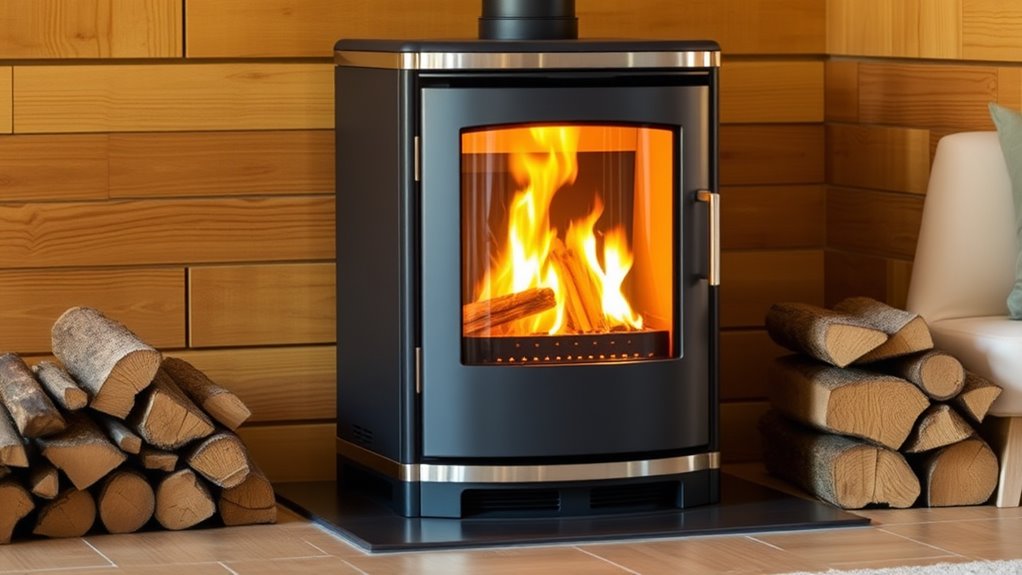
Modern stoves have transformed home heating and cooking with their impressive energy efficiency and advanced features.
These stoves not only save you money but also contribute positively to the environment. Here are three key advantages:
- High Energy Efficiency: Modern stoves convert most of the fuel into usable heat, boasting a minimum efficiency of 75%. This means less fuel consumption and lower heating costs for you.
- Environmental Benefits: With reduced emissions and waste heat, modern stoves are eco-friendly. They utilize advanced combustion technology, producing less smoke and enhancing sustainability, making them a green heating solution.
- Versatility in Cooking: These stoves offer multiple cooking options, adjustable heat settings, and can even function during power outages. This versatility makes meal preparation easier and more convenient. Additionally, their energy efficiency contributes to significant savings on winter heating bills.
Frequently Asked Questions
What Factors Affect the Warranty Period of Log Burners?
Your warranty terms for log burners depend on proper installation and maintenance practices. Ascertain you follow guidelines for inspections and temperature limits; otherwise, you risk voiding your warranty and losing coverage on your investment.
Can I Repair a Damaged Log Burner Instead of Replacing It?
You can often repair a damaged log burner instead of replacing it. Consider repair costs and whether DIY repairs are feasible. Assess the damage first; some issues may require professional help for safety and effectiveness.
How Do I Choose the Right Log Burner for My Needs?
Think of choosing a log burner like selecting a vehicle; you need to evaluate log burner types and heating efficiency. Assess your space, fuel options, and desired warmth to guarantee a perfect fit for your needs.
Are There Specific Brands Known for Longer-Lasting Log Burners?
When considering brand comparisons, look for Blaze King, MORSO, and KUMA for durability. Regular maintenance tips, like cleaning and inspections, can enhance your log burner's lifespan, ensuring you enjoy efficient warmth for years.
How Does the Installation Process Impact a Log Burner's Lifespan?
Imagine a ship steering through turbulent waters. Your log burner's installation materials and proper ventilation are its sails and compass. Without careful setup, it can struggle against the elements, affecting performance and longevity. Prioritize quality for smooth sailing.
Conclusion
In the cozy glow of your log burner, you might envision many winters spent wrapped in warmth. To guarantee that dream lasts, keep an eye on its condition and follow essential maintenance practices. With proper care, you could enjoy its comforting embrace for decades, or even longer. So, as you savor those crackling flames, remember that a little attention now can lead to countless memories around the hearth in the years to come.

Multi fuel stoves are an upcoming trend and the main reason as to why people are switching over to them Read more

As their name suggests, multi fuel stoves allow owners to burn a variety of fuels. They allow the use of Read more

A wood burning stove or multi-fuel stove can be part of a central heating system to keep your house warm Read more