
You’ll need to secure council permission before installing a log burner to guarantee adherence to local building codes and environmental regulations. These rules are in place to guide the placement, materials, and safety features of your installation while considering air quality and emissions standards. Failure to obtain permission can lead to fines, insurance complications, and non-compliance issues. You must submit a detailed application, which includes proof of ownership, property plans, and log burner specifications. Typically, your local council will request a site inspection to verify compliance. Exploring these requirements further can greatly enhance your understanding of the necessary commitments.
Understanding Local Building Regulations
Why must you familiarize yourself with local building regulations before installing a log burner? It’s essential because these regulations are specifically designed to guarantee safety, compliance, and harmony within your community.
Building codes and zoning laws vary markedly from one locality to another, and they govern everything from the placement of your log burner to the materials used and the necessary safety features.
Firstly, building codes often stipulate minimum standards for the installation of heating appliances to prevent fire hazards and guarantee proper ventilation. Ignoring these can’t only endanger your household but also lead to hefty fines and possibly nullify your insurance coverage in case of an accident.
Secondly, zoning laws regulate where in your home you can install a log burner. These laws can affect which rooms are suitable or if your property is zoned for such an installation at all.
They’re in place to control urban and rural development and maintain the aesthetic and environmental standards of the community.
The Role of Environmental Concerns

Besides considering local building regulations, you must also address environmental concerns when installing a log burner. The environmental impact of these heating systems, particularly on air quality, is significant and demands your attention. You’re responsible for ensuring that your log burner complies with emissions standards aimed at reducing the release of pollutants. These standards are essential in protecting the air quality in your locality.
When selecting a log burner, you’ll need to choose models that are certified as low-emission. These units are designed to burn wood more efficiently, producing fewer pollutants such as smoke and particulates that can contribute to air pollution and health problems. It’s not just about compliance; it’s about contributing positively to the environment and community health.
Furthermore, you should be aware of any local restrictions or guidelines related to the use of log burners. Some areas might have specific rules regarding the type of fuel you can use or mandate certain conditions for installation to lessen environmental impact. Ignoring these guidelines can lead to penalties, not to mention the detrimental effects on local air quality.
Steps to Obtain Council Permission
You’ll need to kick off the process of securing council permission for your log burner installation by submitting a detailed application. This application process is vital and requires you to provide specific documentation to guarantee your installation complies with local regulations.
First, gather all required documentation which typically includes proof of ownership or residency, detailed plans of your property, and specifications of the log burner model you intend to install.
Verify that your documentation clearly outlines the installation site, proximity to adjacent properties, and any structural modifications needed for the installation. It’s important that these plans are drawn up by a qualified professional to avoid any compliance issues.
Additionally, you’ll need to submit an environmental impact assessment if required by your local council. This assesses the potential effects on air quality and fire safety.
Once your application and all required documentation are complete, submit them to the local council’s planning department. You’ll then likely face a waiting period during which the council reviews your application.
It’s important to be prepared for a site inspection, as this is often part of the approval process.
Common Reasons for Permission Denial
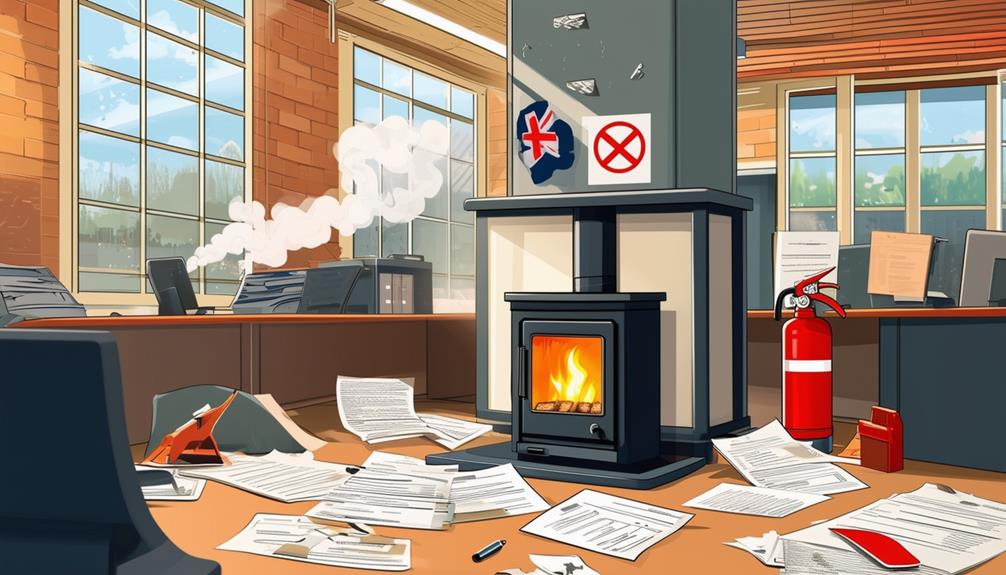
Several factors can lead to the denial of your permission for a log burner installation.
Primarily, your application for planning permission might be rejected if the proposed installation doesn’t comply with local building regulations. These regulations typically focus on safety standards, such as proper ventilation and the structural integrity of the building that will house the log burner. If your installation plan fails to meet these stringent criteria, you’ll likely face a denial.
Another common reason for refusal involves environmental concerns. Log burners can considerably impact air quality, and certain areas, especially urban zones, have strict guidelines about emissions. If your log burner doesn’t conform to the latest environmental standards or if it’s deemed to contribute adversely to local air pollution levels, the council may deny your application.
Additionally, aesthetic considerations in conservation areas or listed properties can also play a vital role. If the installation of your log burner could negatively alter the character or appearance of such areas, you might find obtaining planning permission challenging.
It’s essential that you understand these potential pitfalls before submitting your application. Being aware of these common issues can help you better prepare and possibly avoid the frustration of a denied application.
Tips for a Smooth Approval Process
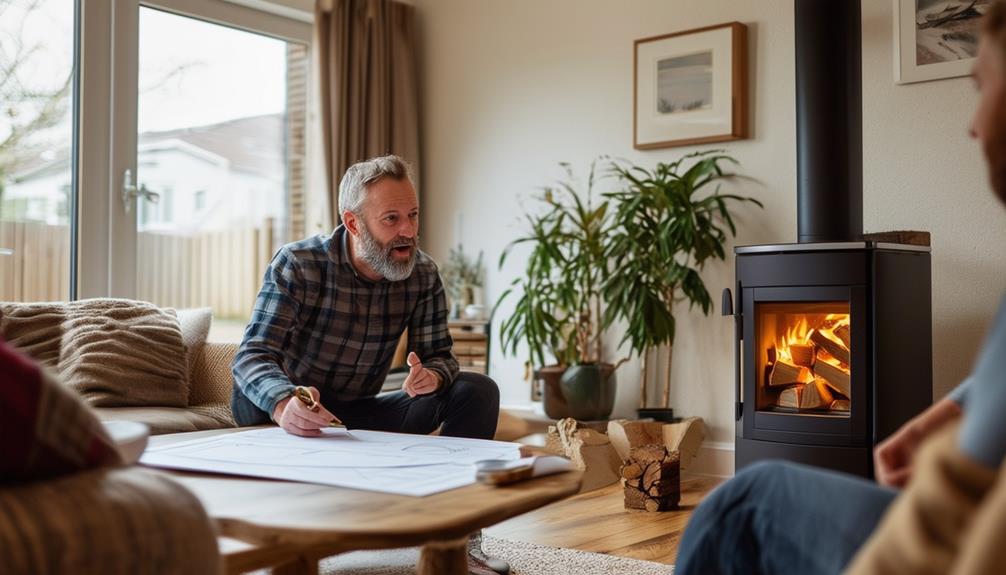
To guarantee a smooth approval process for your log burner installation, familiarize yourself with all relevant local regulations and standards. Start by researching your local council’s specific requirements for log burner installations. This initial step guarantees you’re not caught off guard by unexpected criteria or documentation needs.
When preparing your application, meticulous attention to detail is essential. Confirm that all forms are filled out accurately and completely. Missing or incorrect information can lead to delays or outright denial of your application. It’s also wise to compile a thorough set of documents that substantiate your application. This includes proof of ownership, detailed plans of your home, and specifications of the log burner model.
Consult with an expert or a certified installer who can provide insights into the best practices for documentation requirements. They can offer guidance on the technical specifications needed to comply with local air quality standards and safety regulations. Their expertise won’t only strengthen your application but also streamline the process.
After Installation: Compliance and Safety
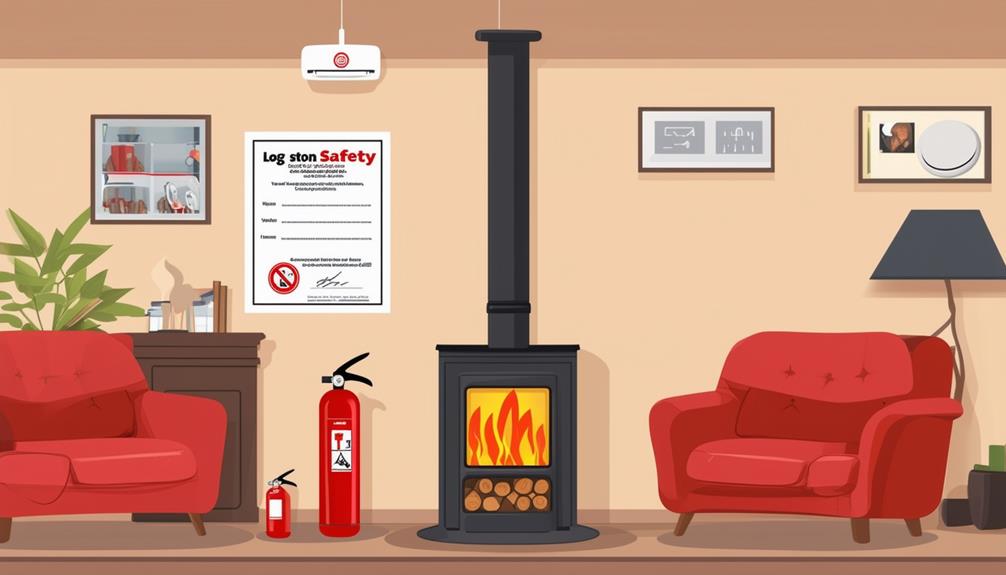
Make certain your log burner remains compliant with local safety regulations by scheduling regular inspections and maintenance checks. Post-installation inspections play an essential role in guaranteeing your log burner operates safely and efficiently year-round. You’ll also want to keep on top of safety maintenance to prevent any potential hazards.
Here’s a quick guide on what to focus on:
| Aspect | Details |
|---|---|
| Annual Inspection | Verify flue integrity, clear blockages, check for wear and tear in the burner. |
| Emissions Check | Confirm your burner meets local emissions regulations to avoid fines. |
| Safety Audit | Examine installation compliance, assess fire safety measures and clearance around the burner. |
| Maintenance | Regular cleaning, replacing worn parts, guaranteeing proper airflow and combustion. |

Multi fuel stoves are an upcoming trend and the main reason as to why people are switching over to them Read more

As their name suggests, multi fuel stoves allow owners to burn a variety of fuels. They allow the use of Read more

A wood burning stove or multi-fuel stove can be part of a central heating system to keep your house warm Read more