
Yes, you need to inform your house insurance provider about installing a log burner to maintain valid coverage. Since log burners increase the risk of fire, failing to report this change can lead to policy complications or even void your coverage entirely during a claim. This installation typically requires a premium adjustment due to the heightened risk. Additionally, ensuring that you have provided your insurer with all necessary documentation, such as the Installation and Compliance Certificates, is essential. Proper disclosure not only prevents legal issues but also secures your financial protection. Understanding more about these impacts can provide greater assurance and clarity.
Importance of Informing Your Insurer
You must inform your insurer when installing a log burner to guarantee your coverage remains valid and all-encompassing. Notifying your insurance provider is a critical step, as the installation of a log burner can alter the terms of your home insurance policy. This is primarily due to the increased risks associated with such appliances, including potential fire hazards.
As a homeowner, it’s your responsibility to confirm that all modifications to your property are reported to your insurance company. Failure to do so can lead to considerable complications if you ever need to make a claim. In some cases, unreported installations like log burners can render your entire policy void, leaving you without coverage when you most need it.
Moreover, insurance policies differ greatly between providers, and some might require additional details such as the make, model, and installation standards of the log burner. Confirming that all these details are communicated effectively will help maintain the integrity of your insurance coverage.
Impact on Insurance Premiums

Installing a log burner in your home often leads to an increase in insurance premiums due to the heightened risk of fire. When you add a log burner, you’re introducing a potential source of fire that wasn’t there before, which understandably makes insurance companies nervous. They see it as increasing the likelihood of a claim being made, hence the bump in your premiums.
You’ll find that insurance costs can vary considerably from one provider to another as each has its method for calculating risk and subsequent premium adjustments. Generally, the increase isn’t just arbitrary; it’s based on statistics and historical data regarding fire claims related to heating appliances like log burners. What you’re paying extra for is fundamentally the increased risk you’re presenting to the insurer.
To manage this rise in premiums, it’s wise to shop around. Comparing quotes can help you find an insurance deal that factors in your log burner but still offers reasonable coverage at a competitive rate.
Additionally, improving safety measures around your log burner, such as installing a fire guard and regular chimney sweeping, might persuade insurers to lower premium adjustments, recognizing your efforts to mitigate the risks.
Risks of Non-Disclosure
Failing to inform your insurer about the installation of a log burner can lead to severe consequences, including the possibility of denied claims. When you install a log burner, you’re introducing a potential source of fire hazards, which increases the risks within your home. Not being upfront about such changes can greatly impact your coverage.
Here are the risks of non-disclosure:
- Denied Insurance Claims: If a fire occurs and your insurer wasn’t informed about the log burner, they may see it as a breach of your policy terms. This can lead to denied claims, leaving you to cover the costs of damages and losses out of pocket.
- Voided Policy: In some cases, failing to disclose a log burner can result in your insurance policy being voided entirely. This means you’d lose all benefits of your insurance, just when you need them most.
- Legal and Liability Issues: Non-disclosure can open you up to liability issues, especially if a fire linked to the log burner damages adjacent properties or injures someone.
Disclosing your log burner helps guarantee that you’re properly covered and protects you against unexpected financial burdens.
Required Documentation for Insurers
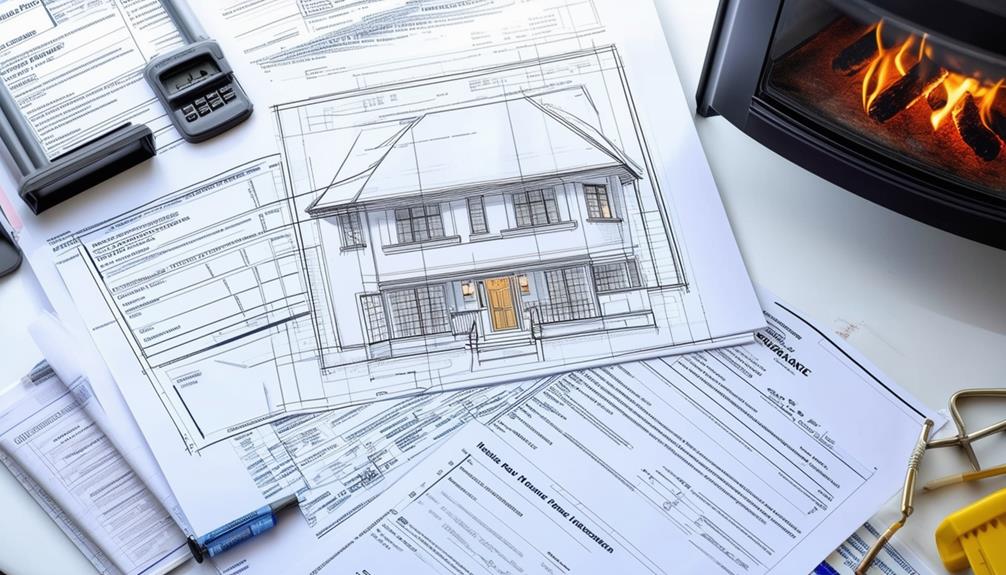
When notifying your insurer about a new log burner, certain documentation must be provided to guarantee your policy is updated correctly. It’s essential to gather all relevant paperwork that reflects the safety and compliance of your installation.
Here’s a concise table to help you organize the documents you’ll need:
| Document Type | Purpose |
|---|---|
| Installation Certificate | Verifies that the log burner was installed according to professional standards and local codes. |
| Compliance Certificate | Confirms the installation meets specific safety and environmental guidelines. |
| Maintenance Records | Shows a history of regular upkeep, essential for ensuring the unit remains in safe working condition. |
| Manufacturer’s Guidelines | Provides details on the correct operation and maintenance practices recommended by the manufacturer. |
Make sure you adhere to the manufacturer’s guidelines and local installation standards. This isn’t just about ticking boxes; it’s about ensuring your home’s safety and keeping your insurance valid. Regular maintenance isn’t only a safety measure but also a requirement from most insurance companies. Keep detailed records of each service or inspection. These documents prove your commitment to maintaining the log burner responsibly, which can be vital in the event of an insurance claim.
Adjusting Your Coverage

After you’ve updated your insurer with the necessary documentation for your log burner, it’s important to review and possibly adjust your coverage to reflect this new addition to your home.
The installation of a log burner can affect your home insurance in several ways, primarily through the need to adjust coverage limits and potentially make policy adjustments.
When considering how to adjust your coverage, keep these factors in mind:
- Increase in Coverage Limits: Assess whether the current property coverage limits are sufficient to cover the added value of the log burner, as well as any potential increase in rebuilding costs.
- Liability Protection: Since log burners can increase the risk of fire, it’s wise to review your liability coverage to make certain it’s adequate in case accidents occur.
- Special Endorsements: Some insurers might require specific endorsements for log burners. Verify whether you need to add any to your policy.
Legal and Safety Considerations
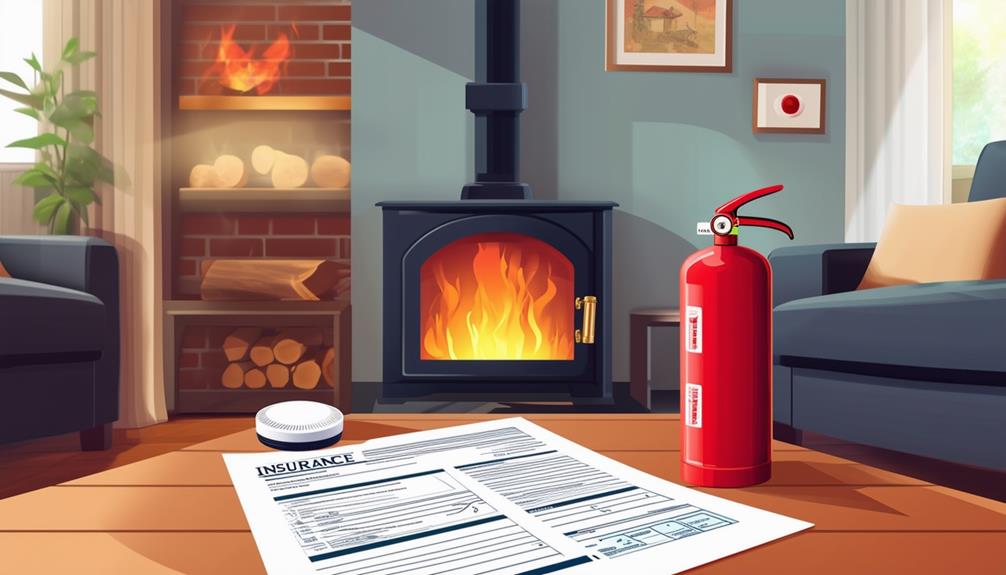
Beyond adjusting your insurance coverage, it’s important to understand the legal and safety requirements that come with installing a log burner in your home. Compliance regulations vary by region, so you’ll need to check local codes and standards. These rules are in place to guarantee that installations are performed safely and reduce risks such as fires or carbon monoxide poisoning.
First, you’ll likely need a permit before installing your log burner. This process guarantees that your installation plans meet local building codes and safety standards. Don’t skip this step; unauthorized installations can lead to penalties, and more importantly, they could put you and your family at risk.
Next, consider the safety inspections that are mandatory post-installation. These are conducted by certified professionals who’ll check that the log burner is installed correctly and venting properly. They’ll also verify that all safety measures, like proper clearance from combustible materials, are met.
Adhering to these guidelines not only keeps you compliant with local laws but also guarantees your safety.

Multi fuel stoves are an upcoming trend and the main reason as to why people are switching over to them Read more

As their name suggests, multi fuel stoves allow owners to burn a variety of fuels. They allow the use of Read more

A wood burning stove or multi-fuel stove can be part of a central heating system to keep your house warm Read more