When you're considering installing a log burner, you might wonder if you really need a professional or if a DIY approach will suffice. While the allure of saving money can be tempting, it's essential to think about the safety and compliance aspects that come with such an installation. A professional can navigate the complex regulations and guarantee everything is up to code, but what happens if you choose to go it alone? The implications of your decision could extend beyond just the installation process. Let's explore what you might be overlooking.
Reasons to Hire a Professional
Hiring a professional to install a log burner can save you time, money, and a lot of headaches. With their years of experience, proficient installers know the best installation techniques to guarantee everything's done correctly. They're well-versed in local building regulations, so you won't have to worry about legal issues later on. When you hire an expert, they'll assess your space properly and determine the safest method for installation, providing you with peace of mind.
Professionals also use high-quality materials and specialized tools, which makes for efficient installations. You'll benefit from their precise measurements, securing a proper fit that minimizes disruption in your home. Additionally, their expert knowledge ensures that your log burner is positioned correctly for optimal performance and safety. Furthermore, they understand the importance of a twin flue chimney for safety and compliance during installation.
Plus, many certified installers offer warranties on their work, giving you added reassurance. Following expert recommendations not only enhances the performance of your log burner but also boosts its energy efficiency, potentially cutting down your utility costs.
The long-term benefits are clear: a professionally installed log burner can increase your property's value and reduce future maintenance needs. Taking this vital step can lead to a safer, more effective heating solution for your home.
Key Safety Considerations
When it comes to installing a log burner, what key safety considerations should you keep in mind? Prioritizing safety is fundamental for a successful installation and ongoing use. Here are three essential points to remember:
- Clearance Requirements: Maintain at least 36 inches of clearance between your stove and any unprotected ceiling or combustible materials. This distance helps prevent fire hazards. Additionally, make sure you have non-combustible floor protection under and around your stove to further reduce fire risks associated with stove operation.
- Chimney Maintenance: Regular chimney maintenance is critical for the safe operation of your log burner. Schedule periodic cleanings to prevent creosote buildup, which can lead to chimney fires. Ensure your chimney is installed correctly to enhance overall safety and optimize performance.
- Safety Equipment: Equip your home with a working carbon monoxide detector, ideally placed about 5 feet below the ceiling. This device is key for detecting dangerous gas levels. Also, consider a fire extinguisher, and never leave your stove unattended while it's in use.
Essential Installation Requirements
Installing a log burner requires careful attention to crucial components to guarantee safety and efficiency. Start by selecting a stove that matches your room size and desired heat output. The flue pipe diameter must align with your stove outlet, and its length should meet the necessary chimney requirements. Don't forget to install a chimney cap to seal the top and prevent debris from entering.
Before installation, verify your existing chimney is clean and inspected by a professional. Clear the area around the stove of any combustible materials, and place your stove on a non-combustible hearth. It's important to have a non-combustible floor pad and wall protection in place. Maintaining clearances for stove and chimney is crucial for safety during operation.
Your chimney should extend at least three feet above the roof and be two feet taller than any structures within ten feet.
During the installation process, the flue pipe needs to be securely routed and sealed to prevent drafts. Use brackets to stabilize the flue, and remember to cap it at the top.
Legal and Regulatory Compliance
Guaranteeing your log burner installation meets legal and regulatory compliance is essential for both safety and peace of mind. You don't want to face potential fines or safety hazards down the line.
Here are some key points to remember:
- Installation Permits: Depending on your location, you may need to obtain specific permits. If you're not using a HETAS-certified installer, you must notify your local Building Control department for inspection.
- Smoke Control Areas: If you live in a smoke control area, your log burner must be DEFRA-approved or an EcoDesign stove to comply with local regulations.
- Regulatory Updates: Stay informed about any updates to regulations, as building codes can change. Regularly check with local authorities to guarantee you're up to date. Additionally, understanding the flue and chimney installation requirements is crucial to ensure compliance and safety.
Risks of DIY Installation
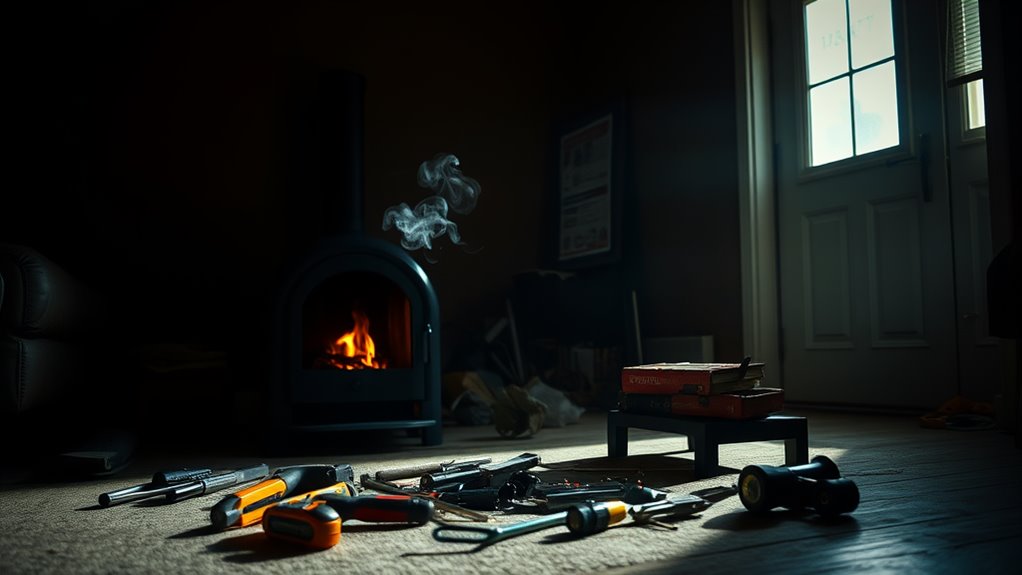
Even with all the legal and regulatory compliance in place, tackling a DIY installation of a log burner can introduce significant risks. The DIY dangers are numerous, and failure to adhere to proper installation guidelines can lead to serious consequences.
For instance, inadequate clearance between your wood burner and combustible materials can result in devastating fires. Similarly, incorrect flue installation can allow harmful gases, like carbon monoxide, to seep back into your home, creating a lethal environment.
Installation pitfalls don't stop there. If you neglect proper floor protection or misuse dampers, you heighten fire risks and compromise the burner's efficiency. Also, creosote buildup in chimneys can ignite and lead to intense chimney fires, causing extensive property damage.
Furthermore, if a fire occurs due to your installation mistakes, your insurance mightn't cover the damages, leaving you facing significant financial losses. Inadequate ventilation can exacerbate health risks, and the environmental impact may worsen due to increased pollutant emissions. Additionally, poor maintenance can lead to harmful particulate matter being released into your home, further endangering your health.
Ultimately, the stakes are too high to gamble with a DIY approach when it comes to installing a log burner.
Importance of Qualified Installers
A qualified installer can make all the difference when it comes to safely and efficiently setting up your log burner. Their installer qualifications guarantee compliance with local building regulations, which is essential for installation safety.
Here are three reasons why hiring a professional is important:
- Regulatory Compliance: Installers with certifications like HETAS or OFTEC guarantee your log burner meets all legal standards, reducing the risk of fines or safety issues.
- Proper Installation: Qualified installers understand proper clearances, chimney installation, and necessary floor protections, which are critical for preventing fires and guaranteeing efficient operation.
- Expertise and Support: Professionals have the skills to troubleshoot potential problems and provide ongoing support, which can save you time and money in the long run. Additionally, they are familiar with environmental standards that ensure your installation minimizes smoke emissions.
Cost Implications of Professional Help
Hiring a qualified installer not only guarantees safety and compliance but also influences the overall cost of your log burner installation.
When you consider installation expenses, it's important to understand the various factors that contribute to the cost breakdown. The type and size of the stove play a significant role, with prices ranging from $400 to $3,500. If you need a new chimney or liner, expect to add $300 to $3,500 to your total.
Labor costs can vary, typically falling between $250 and $800, depending on your location. Additional features like ventilation systems, hearth pads, and wall coverings can further increase expenses, sometimes by $200 to $500.
Don't forget to factor in permit fees, which can cost between $50 and $250.
On average, the total installation cost can range from $1,210 to $8,300. While professional installation may seem pricey upfront, it guarantees compliance with regulations and can prevent costly mistakes that might arise from a DIY approach. Additionally, ensuring proper installation aligns with local regulations on ventilation can enhance safety and efficiency.
Understanding these cost implications is vital for making an informed decision about your log burner installation.
Long-Term Benefits of Professional Installation
When considering the installation of a log burner, the long-term benefits of professional help become clear. Choosing a professional not only enhances safety but also boosts efficiency and extends the life of your appliance.
Here are three key advantages:
- Enhanced Safety: Professionals guarantee that your log burner complies with safety codes, greatly reducing fire hazards and health risks like carbon monoxide exposure.
- Increased Efficiency: A professional installation maximizes heat distribution, leading to reduced wood consumption and lower utility bills. You'll enjoy long-term performance with fewer repairs down the line.
- Maintenance Ease: With proper installation techniques and tools, maintenance becomes simple. Professionals identify potential issues early, guaranteeing your log burner operates smoothly for years. Additionally, they ensure that crucial components like flue liner installations are correctly handled to prevent problems.
Incorporating professional help assures that your log burner not only performs at its best but also remains easy to maintain.
The peace of mind that comes from knowing your appliance is installed correctly and safely can't be overstated. Investing in a professional installer means you can enjoy your log burner without worrying about compliance or efficiency issues in the long run.
Frequently Asked Questions
How Long Does a Professional Installation Typically Take?
A typical log burner installation duration is 3-5 days, influenced by installation factors like chimney condition and necessary construction. Weather and installer availability can also affect how long the process takes.
What Types of Log Burners Can Professionals Install?
What types of log burners can you choose from? Professionals can install freestanding stoves and inset burners, each offering unique benefits. They guarantee proper installation for peak performance, safety, and compliance with local regulations.
Can I Install a Log Burner in Any Room?
You can't install a log burner in just any room. Verify room suitability by checking installation regulations, including size, combustible materials, and ventilation. Proper planning guarantees safety and compliance with local building codes.
What Maintenance Is Needed After Installation?
To keep your log burner humming, establish a cleaning schedule, regularly check for creosote buildup, and perform essential safety checks. This proactive care guarantees efficient performance and a safe, cozy atmosphere in your home.
Are There Warranties for Professional Installations?
Yes, many professional installations offer warranty coverage. These installation guarantees guarantee compliance with safety standards and local regulations, protecting you from potential issues while maximizing your investment and providing peace of mind for years to come.
Conclusion
In the end, it's true what they say: "A stitch in time saves nine." Hiring a professional for your log burner installation not only guarantees safety and compliance but also saves you from costly mistakes down the line. You'll gain peace of mind knowing it's done right, and the long-term benefits will outweigh the initial costs. So, when it comes to warmth and comfort in your home, investing in expert help is always a smart choice.

Multi fuel stoves are an upcoming trend and the main reason as to why people are switching over to them Read more

As their name suggests, multi fuel stoves allow owners to burn a variety of fuels. They allow the use of Read more

A wood burning stove or multi-fuel stove can be part of a central heating system to keep your house warm Read more