
Hetas recently witnessed the inaugural Clean Air Night, organised by Global Action Plan. This event was created to shed light on the pressing issue of wood burning, addressing the industry’s response to various misleading or inaccurate claims put forth by the campaign.
They harnessed connections with consumers, reaching out to tens of thousands of stove users to provide clear and factual guidance on the best practices for using stoves responsibly, with the goal of educating consumers on the environmentally responsible way to burn wood.
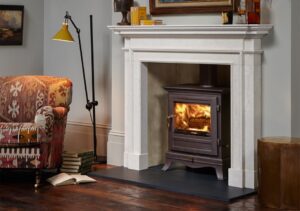 The Environmental Improvement Plan for 2023 has confirmed that domestic burning is not being banned, and we have heard numerous passionate arguments in support of domestic burning. Many consumers are choosing stoves as their primary heat source, underscoring the industry’s responsibility to promote responsible burning through accurate education to minimise its impact on the environment.
In addition to advocating for responsible burning, HETAS is committed to ensuring that relevant legislation is effectively enforced. They are aware that during an energy crisis, with rising costs across all aspects of daily life, people turn to various means to stay warm. However, this should not come at the expense of the environment, air quality, or public health.
A recent Freedom of Information request has highlighted the need for a deeper understanding of source apportionment, an issue the industry has been addressing for many years.
We need to acknowledge that not all wood burning is equal:
Modern Ecodesign-compliant stoves produce 90% fewer particulate emissions compared to inefficient open fires.
In London, 70% of wood burned occurs in open fires, which is inefficient and prohibited in smoke control areas.
There are numerous other sources of indoor particulate matter (PM), such as cooking, which release significantly higher levels of indoor PM compared to modern wood-burning stoves.
HETAS Cleaner Choice certified products must demonstrate at least a 50% improvement in clean air particulate emissions, with some products achieving up to a 70% improvement.
 In the coming weeks, we can anticipate the publication of Defra’s “Emissions of Air Pollutants in the UK” report, containing statistics spanning from 1970 to 2022. This data is sourced from the National Atmospheric Emissions Inventory (NAEI), which is compiled using internationally agreed methods and data from various surveys and administrative sources, including government departments, agencies, and commercial organisations.
Following this, two additional reports are scheduled for release: Defra’s Air Quality Statistics will be available soon, followed by the National Atmospheric Emissions Inventory (NAEI) report in early summer.
The Office for Environmental Protection (OEP) has recently published its annual progress report, assessing the government’s progress toward legally binding environmental targets and the objectives of its Environmental Improvement Plan (EIP) for the period from April 1, 2022, to March 31, 2023.
The OEP’s report indicates that the government is largely off-track in meeting its environmental targets and goals and must significantly accelerate its current pace and scale of action to achieve them. The report makes several recommendations, including the need for a detailed delivery plan to effectively implement the EIP and the requirement to develop and implement an effective monitoring, evaluation, and learning framework.
Specifically, with regard to clean air and domestic combustion, the OEP’s report underscores that technological advancements alone are insufficient to combat air pollution; there is also a need for improved education and awareness.
For more information or to make an appointment, call us 01159 523053 or email us info@nottinghamstoves.com visit our website www.nottinghamstoves.com.

Do you want to feel warm and toasty despite the flurry of snow outside? Who doesn't? In the cold winter Read more

A wood burning stove or multi-fuel stove can be part of a central heating system to keep your house warm Read more

Wood burner or Multi fuel stove? Before you make a decision on buying a wood burner or multi fuel stove Read more