
You might find it interesting that many people overlook ash management until it becomes a problem—just like that friend who waits until their car won't start before checking the oil. When it comes to your log burner, knowing how often to empty the ash is key to maintaining efficiency and safety. But what are the signs that indicate it's time for a clean-out? Understanding the right frequency not only enhances your burner's performance but also affects your indoor air quality. Let's explore the nuances that can make all the difference in your wood-burning experience.
Importance of Ash Management
Effective ash management is vital for every log burner owner. Properly handling ash not only minimizes the risk of fire and carbon monoxide poisoning but also prevents corrosion in your firebox and grate. Regular chimney sweeping is essential for maintaining a safe and efficient burning environment.
When ash accumulates, it can restrict airflow, leading to inefficient operation of your stove. This inefficiency can result in increased emissions, contributing to ash toxicity and negatively impacting the environment. Additionally, utilizing wood ash as a natural herbicide can help in maintaining a sustainable garden, further enhancing your eco-friendly practices.
Being mindful of ash disposal is important for safety as well. Hot ash can spread active embers, posing a significant fire hazard. By adhering to local regulations regarding ash management, you guarantee that you're not only compliant but also reducing your environmental impact. Regular chimney sweeping, as recommended by HETAS, further supports safe operation.
Regularly checking and removing ash—ideally when it exceeds a few inches—will maintain ideal heat distribution and air flow.
Additionally, proper ash management can prevent moisture buildup at the end of the burning season. By managing ash responsibly, you're protecting your home, enhancing your log burner's efficiency, and contributing to a healthier environment.
Prioritize these practices to enjoy your log burner safely and sustainably.
Recommended Ash Depth
Maintaining the right ash depth in your log burner is essential for peak performance and safety. Aim to leave a 1-2 inch layer of ash on the firebox floor during the heating season. This ash layer acts as effective ash insulation, protecting the firebox while reflecting heat back into the fire, which ultimately boosts fire efficiency. Properly managing airflow and combustion is crucial, as leaving too little ash can make it challenging to start a fire. Conversely, excessive ash can obstruct airflow, leading to reduced combustion quality and increased smoke production. Regularly monitor the ash buildup; it shouldn't exceed 2 inches to guarantee ideal airflow and efficiency. Additionally, using seasoned wood in conjunction with the right ash depth can significantly enhance the overall performance of your log burner.
Frequency of Ash Removal
The frequency of ash removal from your log burner directly impacts its performance and safety. Different fuel types necessitate varying ash removal schedules. If you're using a wood-burning fireplace, expect to remove ash more frequently than with gas or pellet options. Softwoods produce more ash than hardwoods, which means you'll need to clean up more often if you prefer softer fuels. For regular use, aim for weekly ash removal to prevent excessive ash buildup, which impacts not just efficiency but also safety. Burning three cords of wood per year can lead to significant ash production, emphasizing the need for vigilance. Additionally, proper air circulation is essential for effective burning, so keeping the ash levels in check is important. Monitor the ash level closely; a one-inch bed of ash can improve fire efficiency, but you should clear it when it exceeds this. Regular cleaning routines can help mitigate fire hazards and ensure your log burner operates smoothly. Always prioritize safety during ash removal by using protective gear and metal tools.
Signs It's Time to Clean
Recognizing the signs that it's time to clean your log burner is key to keeping it running efficiently and safely. Ignoring these indicators can lead to reduced fire efficiency and potential safety hazards.
Here are four signs to watch for:
- Reduction in Airflow: If you notice your fire struggling to burn, excessive ash buildup may be blocking airflow. This impacts combustion efficiency, forcing you to use more fuel.
- Difficulty Starting Fires: A deep layer of ash can make it hard to get a fire going. If your logs aren't igniting easily, it's time to clear out some ash.
- Visual Indicators: Keep an eye out for visible soot and unburned wood. If you see layers of fine ash or clumps, your log burner needs attention.
- End-of-Season Maintenance: At the end of the burning season, make sure you fully remove ash to prevent moisture absorption and rust, which can compromise your burner's longevity. Additionally, regular maintenance will help reduce health risks associated with wood smoke, ensuring a safer burning environment.
Health and Safety Tips
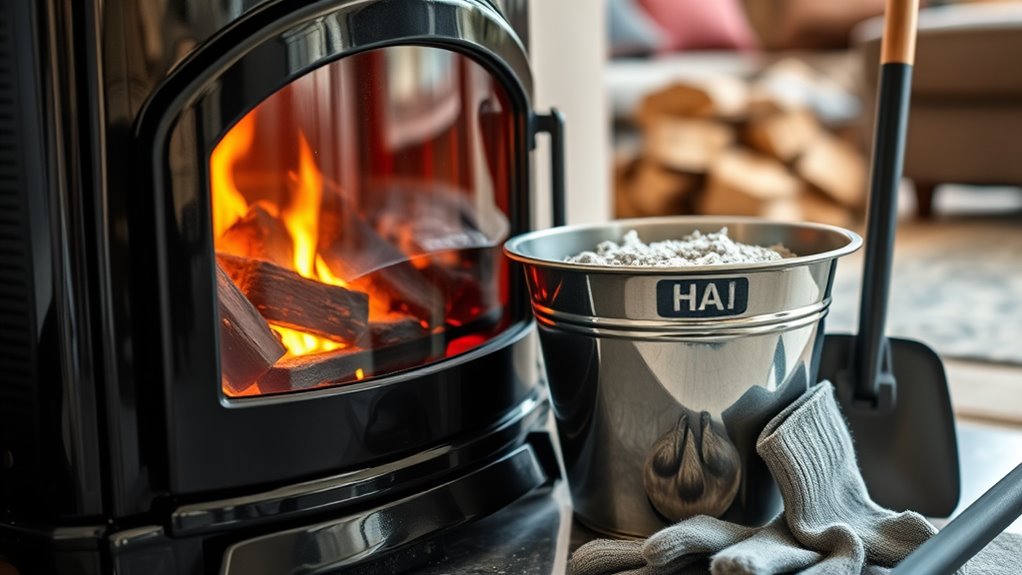
When it comes to ash management, prioritizing health and safety is essential for your well-being and the efficient operation of your log burner. Improper handling of ash can lead to considerable ash hazards, including carbon monoxide poisoning and fire risks from excessive buildup.
To protect yourself, wait at least 24 hours after using your log burner before removing ashes to verify they're cool. Always wear ash protection gear like gloves, goggles, and a dust mask. These items safeguard you against skin burns, eye irritation, and respiratory issues caused by inhaling ash particles.
Use metal tools, such as shovels and buckets, which are less likely to ignite and can handle hot ash safely. Make sure to conduct ash removal in a well-ventilated area to minimize inhalation risks, and store removed ashes away from combustible materials to prevent fire hazards.
Regular inspections and scheduled cleanings will help you stay ahead of ash buildup, promoting a safer environment. If you encounter extensive ash accumulation, consider seeking professional assistance to verify proper maintenance and safety. Additionally, regular upkeep of your log burner can enhance energy efficiency and prolong its lifespan.
Taking these precautions can considerably decrease your risk while maintaining your log burner effectively.
Proper Ash Disposal Methods
Properly disposing of ash from your log burner is essential for safety and efficiency. Following proper methods guarantees you handle ash safely and can even recycle it for beneficial uses around your home.
Here are some effective disposal steps:
- Wait at Least 24 Hours: Allow ashes to cool completely to avoid any risk of hot embers.
- Collect Ashes Carefully: Use a metal or earthenware bucket to gather ashes, steering clear of flammable materials.
- Store Ashes Safely: Place the cooled ashes in a sealed, metal container and keep it at least 10 feet away from your home.
- Recycle Wisely: Once cooled, consider using the ash for garden compost, improving soil nutrients, or as traction on icy surfaces. Additionally, properly managing ash disposal can contribute to eco-conscious lifestyles and enhance the overall safety and efficiency of your wood burning stove.
Essential Tools for Ash Removal

Efficient ash removal from your log burner relies on having the right tools at your disposal. Start with a stainless steel ash scoop. This tool is specifically designed for wood-burning stoves and fireplaces, featuring fully welded seams and a smooth beveled handle. Its dimensions—6" high, 8" wide, and 22" long—allow it to reach deep into your stove, minimizing the number of trips you need to take to dispose of ash.
Next, invest in a heat-resistant metal container for storing cooled ashes. These containers help prevent accidental fires and are designed to reduce spillage during transport.
Pair your scoop with an ash vacuum for a more thorough clean. Fireplace vacuums are specialized to handle ash, using gentle movements to avoid clouds of dust. Always check the filters before use to guarantee peak performance.
For those who prefer DIY solutions, a stainless steel mesh can help sift through ashes, separating larger fragments. Using a flat spatula might also be effective for specific stove designs.
Regularly removing ash contributes to operational techniques for maintaining an efficient fire and ensuring optimal heat output. With the right tools, you'll maintain a clean log burner and enjoy a safer, more efficient heating experience.
Seasonal Ash Maintenance
Seasonal ash maintenance is essential for maximizing the efficiency and safety of your log burner. To guarantee you're on top of ash buildup throughout the year, follow these key seasonal adjustments:
- Heating Season: During active months, aim to remove ashes daily or weekly based on your usage. This keeps the combustion process efficient.
- End of Season: At the season's close, remove all ashes completely to prevent moisture and acid damage to your burner.
- Climate Considerations: In colder climates, you'll likely need to clean out ashes more often due to increased wood consumption.
- Regular Inspections: Conduct inspections before the heating season starts. This helps identify any potential ash buildup or safety issues. Additionally, maintaining a clean burner can improve flue and chimney installation effectiveness, ensuring optimal performance.
Benefits of Regular Cleaning
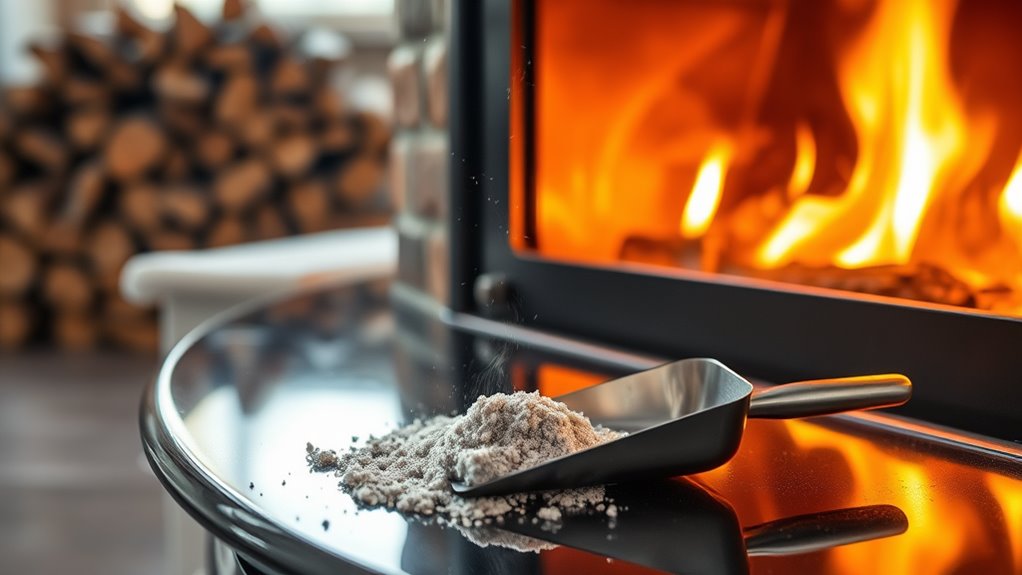
Keeping your log burner clean goes well beyond seasonal maintenance; it directly impacts safety, efficiency, equipment preservation, and your health. Regular cleaning guarantees that ash properties work for you, not against you. Here's a quick overview of the benefits:
| Benefit | Explanation | Cleaning Techniques |
|---|---|---|
| Safety | Prevents airflow blockage and corrosion risks. | Use protective gloves and a metal shovel for safe ash removal. |
| Efficiency | A thin layer of ash enhances fire warmth and efficiency. | Clean regularly to maintain ideal burning conditions. |
| Equipment Preservation | Prevents damage to the firebox and chimney. | Remove ash carefully without overcleaning. |
Additionally, maintaining a clean stove contributes to improved combustion efficiency, ensuring that your wood burns optimally.
Frequently Asked Questions
Can I Use Ash for Composting in My Garden?
You can definitely use ash for composting in your garden! Its benefits include enriching soil with potassium. Just remember these composting tips: mix it well, use sparingly, and avoid ash from treated wood or coal.
What Types of Wood Produce the Least Ash?
When choosing wood, hardwoods like oak and maple offer benefits with minimal ash production. In contrast, softwoods often have drawbacks, producing more ash due to lower density and higher moisture content. Select wisely for cleaner burning.
How Do I Prevent Ash From Blowing Around?
To prevent ash from blowing around, use effective ash containment methods like a wedge-shaped scoop and small bucket. Create wind barriers around your stove to minimize dust release during ash removal, ensuring a clean environment.
Is It Safe to Use Ash for Traction on Ice?
Using ash for traction on ice is like walking on a winter wonderland; it can provide grip. However, guarantee you prioritize ice safety by wearing gloves and avoiding ashes from chemical-laden fires. Stay safe and smart!
Can I Burn Different Types of Fuel in My Log Burner?
Yes, you can burn different fuel types in your log burner, but consider their burning efficiency. Each type affects ash production and chimney maintenance, so choose wisely to guarantee peak performance and safety.
Conclusion
To sum up, regularly emptying the ash from your log burner isn't just about keeping it tidy; it's essential for peak performance and safety. Imagine trying to ignite a fire, only to struggle with a pile of ash blocking your airflow—frustrating, right? By maintaining a clean burner, you not only enhance combustion but also protect your indoor air quality. So, make ash management a priority, and enjoy the warmth of your log burner without the hassle.

Multi fuel stoves are an upcoming trend and the main reason as to why people are switching over to them Read more

As their name suggests, multi fuel stoves allow owners to burn a variety of fuels. They allow the use of Read more

A wood burning stove or multi-fuel stove can be part of a central heating system to keep your house warm Read more